
Mexican feather grass
Alert
Be on the lookout for Mexican feather grass and report any sightings immediately.
Reporting options
- Report online.
- Call Biosecurity Queensland on 13 25 23.
- Phone the Exotic Plant Pest Hotline on 1800 084 881.
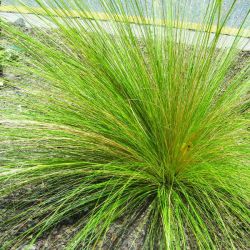
Mexican feather grass plant form
© Queensland Government
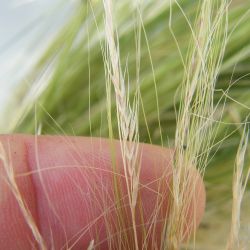
Mexican feather grass seed heads
© Queensland Government
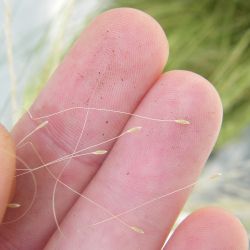
Mexican feather grass seed heads close-up
© Queensland Government
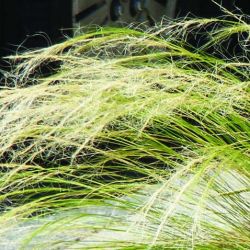
Mexican feather grass
© Queensland Government
Native to North America and South America, Mexican feather grass is a densely tufted perennial tussock grass.
As a low-protein, high-fibre grass, it has no grazing value. Pure stands of Mexican feather grass render a paddock worthless.
In 2008, Mexican feather grass was mislabelled and sold through Queensland nursery and landscape outlets as Stipa capriccio. Landscapers have planted the grass in gardens and other areas as part of landscaping projects.
Scientific name
Other names
- Texas tussock, white tussock, ponytail grass, tussock grass
Similar species
Description
- This densely tufted perennial tussock grass grows up to 70cm high.
- Seed heads are pale and 15–25cm long. The lower glume is 9–10mm long.
- Leaves are thread-like, 0.25–0.5mm in diameter and about 60cm long.
- Flowers have a single, bisexual floret per spikelet, surrounded by 2 persistent bracts or glumes.
- Stems are up to 70cm high.
- Overall appearance is similar to several species of Stipa grass.
3D model
- View the 3D model to help you identify this plant. You can magnify the image and manipulate the view to inspect the plant from every angle.
Habitat
- Prefers a dry, temperate climate.
- Grows naturally in open woodlands and grasslands in North and South America.
Distribution
- First detected in 2008 in Bulimba, Brisbane.
Life cycle
- Flowering occurs from August to February.
- The plant reproduces from seeds.
- Seeds can remain viable for up to 4 years.
Impacts
Environmental
- Causes severe environmental damage to native grasslands.
Economic
- Invades productive pastures.
How it is spread
- Seeds spread by flooding, by movement of vehicles and machinery, and by sticking to clothing, livestock, and fur of pets.
Prevention
Control
- Before undertaking any preventative or control actions, contact us online, by phone or in person.
Legal requirements
- Mexican feather grass is a prohibited invasive plant under the Biosecurity Act 2014. You must not:
- keep it
- move it
- give it away
- sell it
- release it into the environment.
- You must not take any action that is reasonably likely to exacerbate the biosecurity threat posed by Mexican feather grass.
- You must take any action that is reasonably likely to minimise the biosecurity threat posed by Mexican feather grass.
- You must report any sightings immediately using 1 of these methods:
- Report online.
- Phone Biosecurity Queensland on 13 25 23.
- Phone the Exotic Plant Pest Hotline on 1800 084 881.
If you do any of these, penalties may apply.
Further information
- Contact us online, by phone or in person.
- Read the Mexican feather grass fact sheet.
- Read the Mexican feather grass risk assessment.
- View the Mexican feather grass 3D model.