Special wildlife reserves
Special wildlife reserves, like national parks, are created to protect areas of Queensland identified as containing exceptional natural and cultural resources and values. Queensland is the first jurisdiction in Australia to create a protected area of this kind for private land.
Queensland has 3 special wildlife reserves and is currently progressing several applications.
On this page
A special wildlife reserve is a voluntary, binding and perpetual agreement between a landholder and the Queensland Government to protect the exceptional natural and cultural resources and values of privately managed land in Queensland. A special wildlife reserve is the highest class of private protected area under the Nature Conservation Act 1992 that once declared, must be managed to:
- permanently protect the area’s exceptional natural and cultural resources and values
- protect the area’s exceptional scientific values
- present the area’s cultural and natural resources and values
- ensure the only use of the area is nature-based and ecologically sustainable.
Land declared as a special wildlife reserve receives statutory protection from incompatible land uses such as mining, commercial grazing and native timber harvesting. Given the State is agreeing to forgo such interests on private land (where they still exist) the values benchmark for a special wildlife reserve is extremely high and must be consistently applied when assessing all proposals.
The declaration of a special wildlife reserve does not change the ownership or management responsibilities of the land. The landholder must be able to demonstrate conservation expertise, financial capacity, and have a demonstrated and appropriate governance structure in place to be able to manage the land and its exceptional conservation values in perpetuity, and in accordance with a statutory management program agreed to by, and developed in consultation with, the Queensland Government.
Special wildlife reserves provide an opportunity for private land containing exceptional natural and cultural resources and values to be protected and properly managed now and into the future.
Benefits of a special wildlife reserve include:
- an equivalent level of statutory protection for natural and cultural values as that afforded to a national park, in perpetuity
- statutory protection from other incompatible land uses such as mining and timber harvesting
- best practice private land management to achieve biodiversity conservation outcomes
- increased confidence for investment in private land conservation in Queensland.
The Queensland Government applies a targeted approach to identifying areas of conservation significance for potential inclusion in Queensland’s protected area system. This approach not only considers land for acquisition by the State, but also identifies privately owned land that may be suitable for voluntary declaration as a nature refuge or special wildlife reserve.
For a special wildlife reserve, the State’s initial assessment process is two-fold, and is conducted in consultation with the landholder. It considers not only the broad set of values and interests in the target land, but also the landholder’s capacity to undertake an ongoing, high standard of conservation land management. The expectation is that special wildlife reserves would have conservation values equivalent to those that the Queensland Government looks for when considering land for national park dedication and must be owned by a landholder that can demonstrate well-resourced conservation land management capacity similar to that applied to national parks.
A special wildlife reserve assessment may consider, but is not limited to:
- the exceptional natural and cultural resources and values of the land
- long term viability of the land’s exceptional resources and values
- whether the exceptional natural resources and values of the land are adequately represented in Queensland’s existing protected area system
- the land’s overall contribution to the protected area system
- potential and active threats to the natural and cultural resources and values of the land
- existing and past land uses and management regimes
- landholder expertise and capacity necessary to provide an ongoing professional, well-resourced high standard of conservation land management.
After this assessment, the Queensland Government evaluates the alternative uses for the land as early as practicable to consider the relative merits of all potential alternate land uses. Amongst other things, the land’s current and future suitability for agricultural production, timber harvesting and resource extraction is evaluated and considered in relation to the land’s exceptional natural and cultural values. This process includes extensive inter-agency consultation across government.
Landholder suitability, including expertise, capacity and governance structure is assessed to provide confidence to the State that the land can be managed to a high standard over the long term.
In considering an area’s suitability for declaration as a special wildlife reserve, information is collected and evaluated to determine whether the area meets the criteria to be declared as a special wildlife reserve, including whether the area contains exceptional natural and cultural resources and values. These values are identified and assessed for their significance using a range of information sources.
Natural resources and values
To be considered as an area with exceptional natural resources and values, a proposed special wildlife reserve must be considered as one of the most important places in the landscape for conserving a particular natural resource or value. This may include a species, a group of species, a population, a regional ecosystem, a group of regional ecosystems, a vegetation community, an ecological community, a habitat, or an ecological interaction. Natural resources and values are assessed at the property, landscape and strategic level to take into account the state-wide, national and global context of the resource or value and the importance of the proposed special wildlife reserve in protecting and conserving that natural resource or value.
Cultural resources and values
The assessment of Indigenous cultural resources and values is founded on the intent and principles of the Nature Conservation Act 1992, the Aboriginal Cultural Heritage Act 2003 and the Torres Strait Islander Cultural Heritage Act 2003, which recognise that First Nations Peoples are the primary guardians, keepers and knowledge-holders of their cultural heritage. First Nations Peoples are actively engaged in cultural heritage assessments on proposed special wildlife reserves and facilitate the identification of Aboriginal and Torres Strait Islander cultural heritage, including the exceptional cultural significance of the area.
The assessment of non-Indigenous cultural resources and values is guided by the provisions of the Nature Conservation Act 1992, the Queensland Heritage Act 1992, and the knowledge and expertise of cultural heritage specialists within the Queensland Government.
The Queensland Government calls for expressions of interest for a special wildlife reserve by invitation only. Once the initial assessment to validate the land’s exceptional values and landholder’s suitability has been completed, accepted proposals continue through to the next stage.
Several key processes occur during this stage, such as:
- Consultation with a broad range of interested parties (including State interests, native title interests, interests on title such as leaseholders and mortgagees, and others with an interest in the land) to assess current and potential future land uses, and where necessary, seek consent from those with an interest in the land.
- Engagement with First Nations People to best understand the Aboriginal and Torres Strait Islander cultural heritage of the land, including the exceptional cultural resources and values of the area.
- Collaboration between the Queensland Government and the landholder to develop the statutory documents that outline the terms, conditions and management regime the special wildlife reserve will be governed by.
The two key statutory documents governing a special wildlife reserve, are the conservation agreement and the management program.
A conservation agreement is a perpetually binding deed that applies over the land, negotiated between the landholder and the Minister for the State. The conservation agreement outlines the framework for protection of the land’s exceptional values and is binding on subsequent landholders (successors in title).
The management program outlines in detail the exceptional natural and cultural resources and values that exist on the special wildlife reserve and the related conservation management actions, monitoring and reporting requirements specific to the protection of those values. A management program may also provide statutory authorisations so that appropriate activities can be carried out on the land for conservation management purposes.
The endorsement of these documents and subsequent declaration of the special wildlife reserve by the Queensland Government ensures enduring protection of each special wildlife reserve’s exceptional natural and cultural resources and values.
Special wildlife reserves do not impact on native title.
The Queensland Government is committed to ensuring that no obligations or restrictions will be placed on native title parties that would interfere with the exercise of native title rights.
Where the interests of Traditional Owners or native title holders would be materially affected by a special wildlife reserve conservation agreement, their written consent is required before the agreement can go ahead.
There are also special conditions for special wildlife reserves in the Cape York Peninsula region. A conservation agreement for a special wildlife reserve in the Cape York Peninsula region may only be entered into if an Indigenous Land Use Agreement for the land exists. This provision is applied to areas where native title has not been extinguished.
The intention of a special wildlife reserve declaration is that it is perpetual. Revocation cannot occur simply due to a landholder’s wishes. Revocation of a special wildlife reserve can only occur upon a resolution of Queensland Parliament, following the same process as required for national park revocations.
Pullen Pullen Special Wildlife Reserve
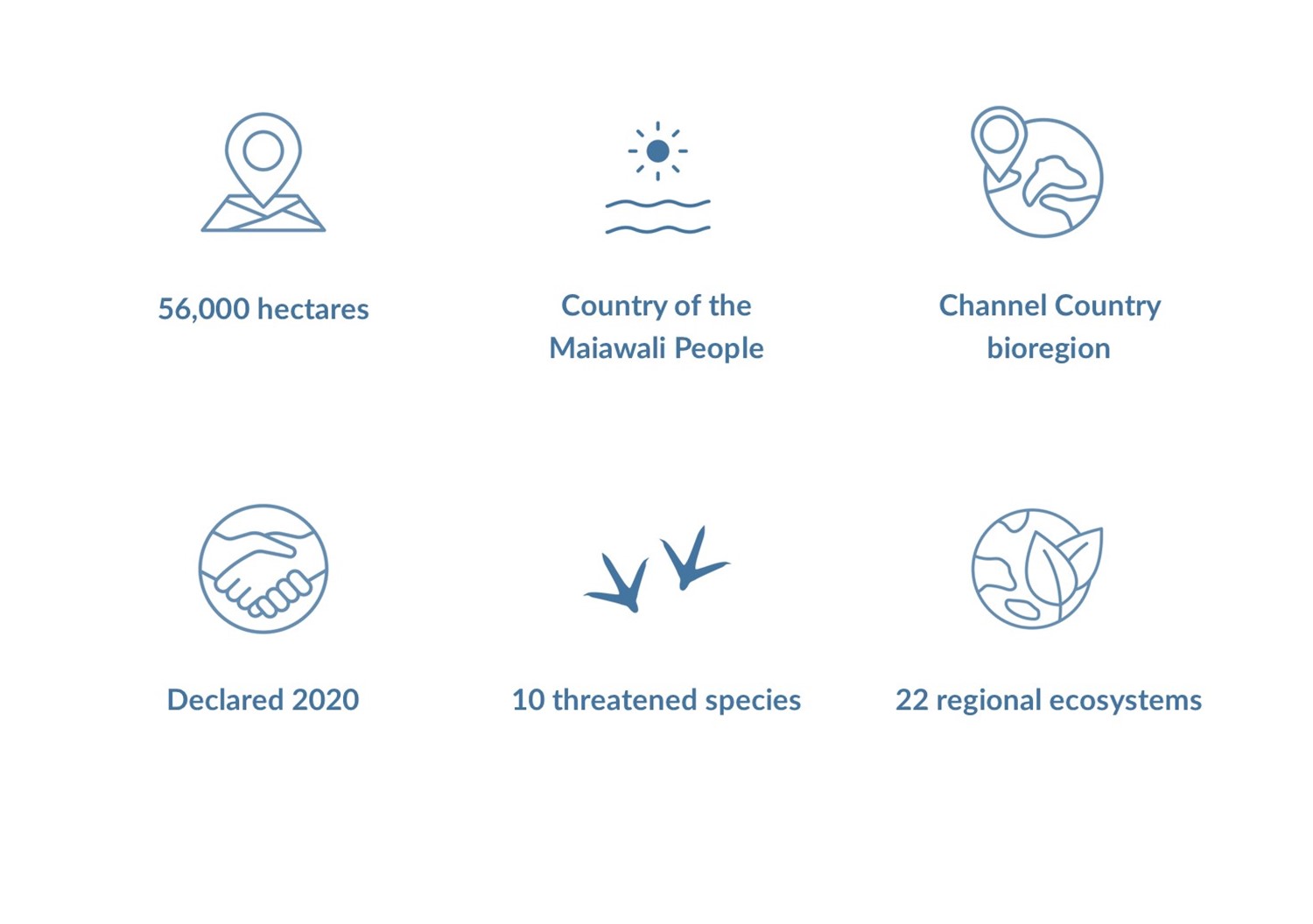
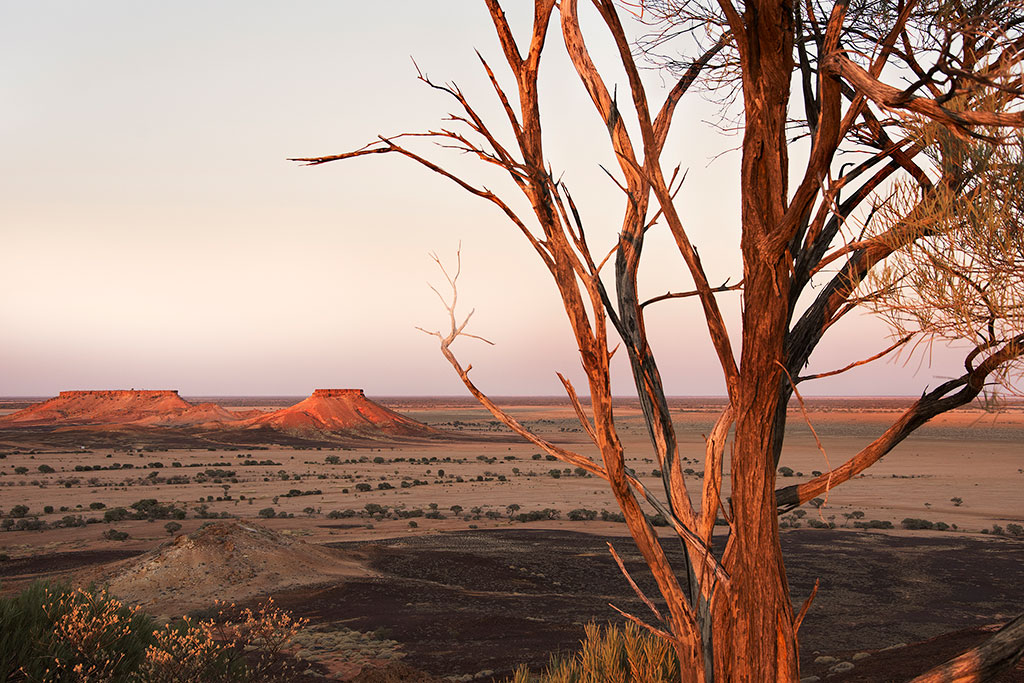
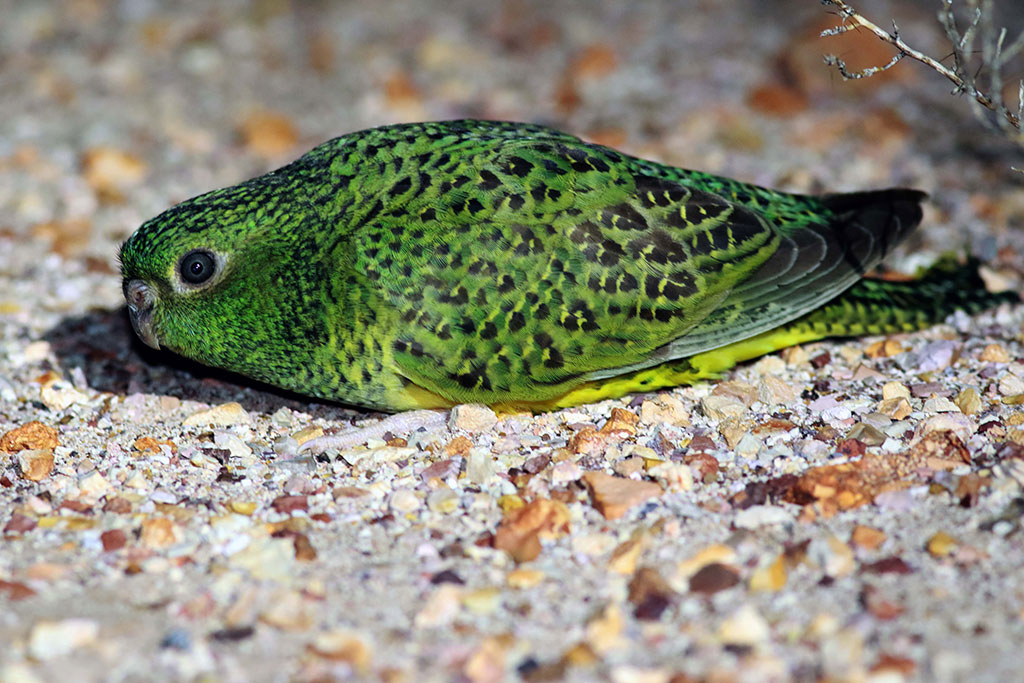
Bush Heritage Australia's Pullen Pullen Reserve, west of Longreach became the State’s first special wildlife reserve when declared in September 2020.
Queensland is the only state to provide national park level protection to private land, which made the declaration of Pullen Pullen Special Wildlife Reserve in 2020 an Australian first as well.
National conservation not-for-profit, Bush Heritage Australia purchased Pullen Pullen in 2016 to protect critical habitat of one of the world’s most elusive and endangered birds—the night parrot. This critically endangered species was thought to be extinct for more than 100 years until it was re-discovered at Pullen Pullen in 2013. Bush Heritage Australia has secured and protected more than 56,000 hectares of the bird’s habitat from threats such as predation by feral cats and foxes.
The added level of protection that comes with the special wildlife reserve status will ensure Pullen Pullen is permanently protected from possible incompatible land uses such as mining, timber harvesting and grazing.
This reserve is important to the Maiawali First Nations People—the Traditional Custodians of the land—who have worked closely with Bush Heritage Australia to identify and protect the reserve’s ecologically and culturally important values. Pullen Pullen is a regional language name word for night parrot.
You can watch a short video about Pullen Pullen.
Edgbaston Special Wildlife Reserve
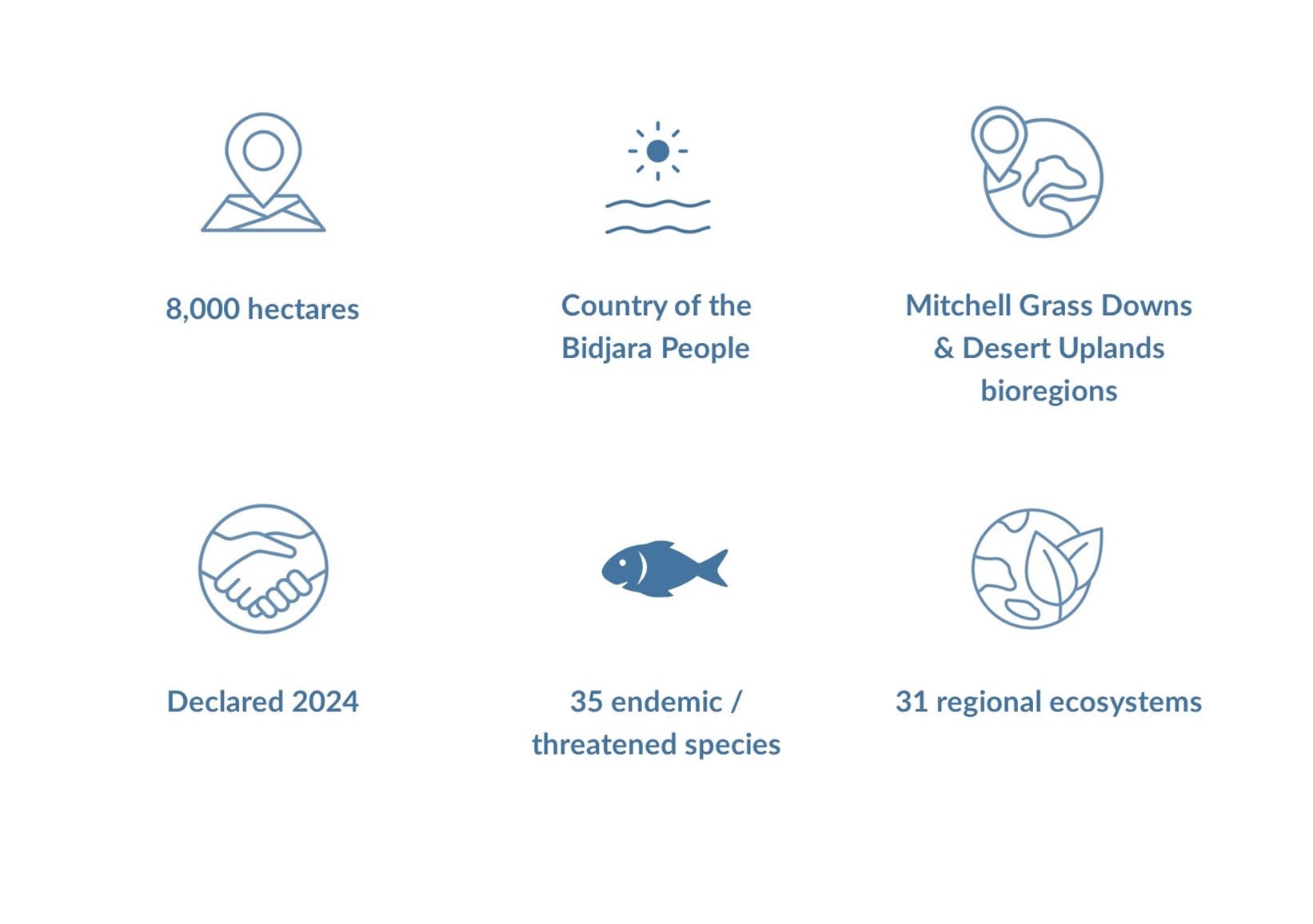
In September 2024, Edgbaston Reserve, an around 8,000-hectare property north-east of Longreach, was declared Queensland’s second special wildlife reserve. It was established following an agreement with landowners Bush Heritage Australia.
As a special wildlife reserve, the environmentally-significant property safeguards a key Lake Eyre Basin area and is protected against commercial activity under Queensland law.
About Edgbaston:
- it is home to the most significant natural springs for global biodiversity in the entire Great Artesian Basin and one of the most important in the world.
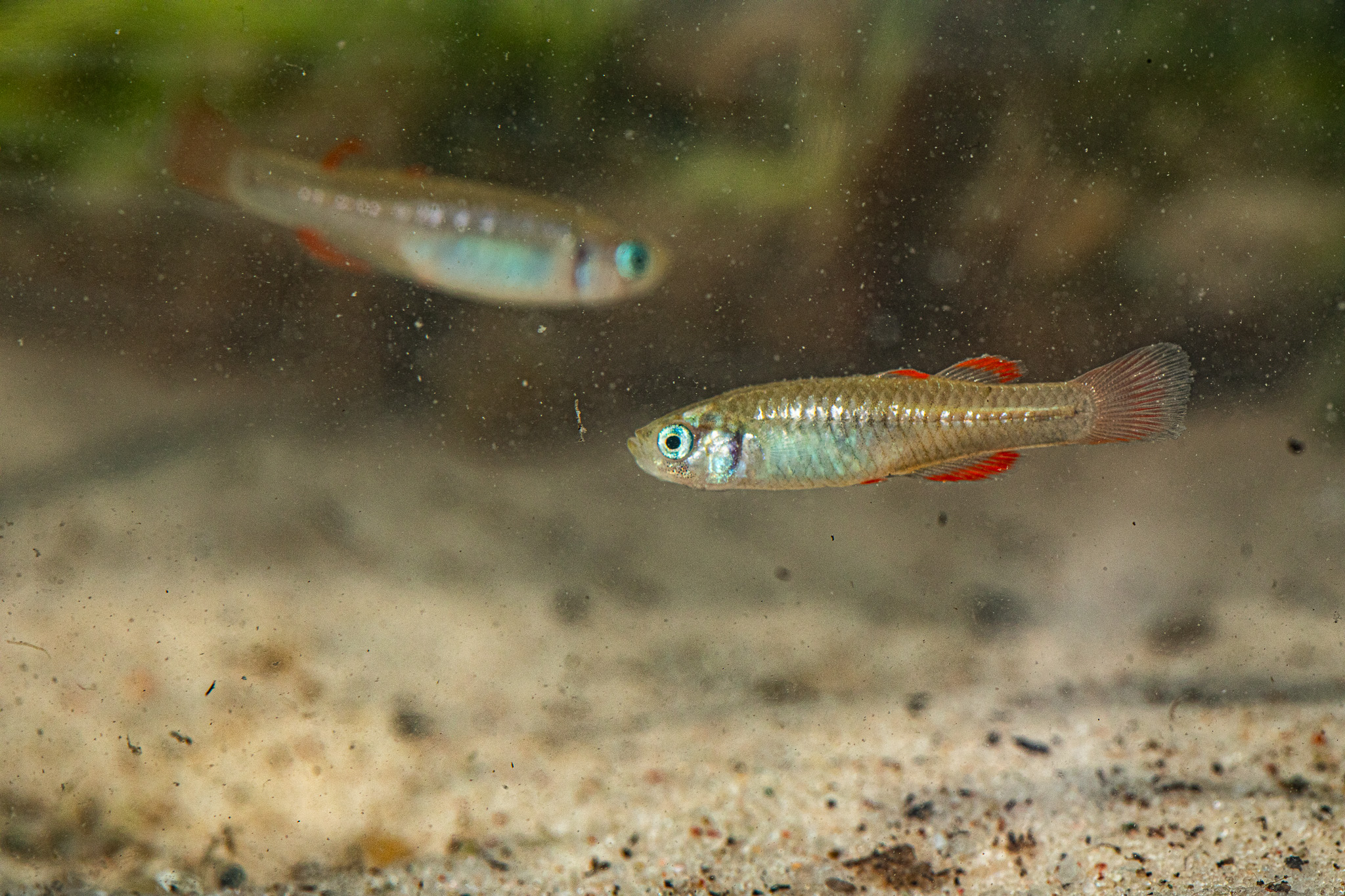
- it provides critical habitat for 26 plant and animal species found nowhere else in the world, including one of Australia’s smallest and most threatened freshwater fish, the critically endangered red-finned blue-eye.
- it has been the cornerstone of many discoveries of new species including 15 types of plants and the yet-to-be-described Edgbaston shrimp and amphipod.
- it was already declared a nature refuge in 2014, and Bush Heritage Australia expressed interest to the Queensland Government to enhance the level of protection to the reserve by declaring it a special wildlife reserve.
Pilungah Special Wildlife Reserve
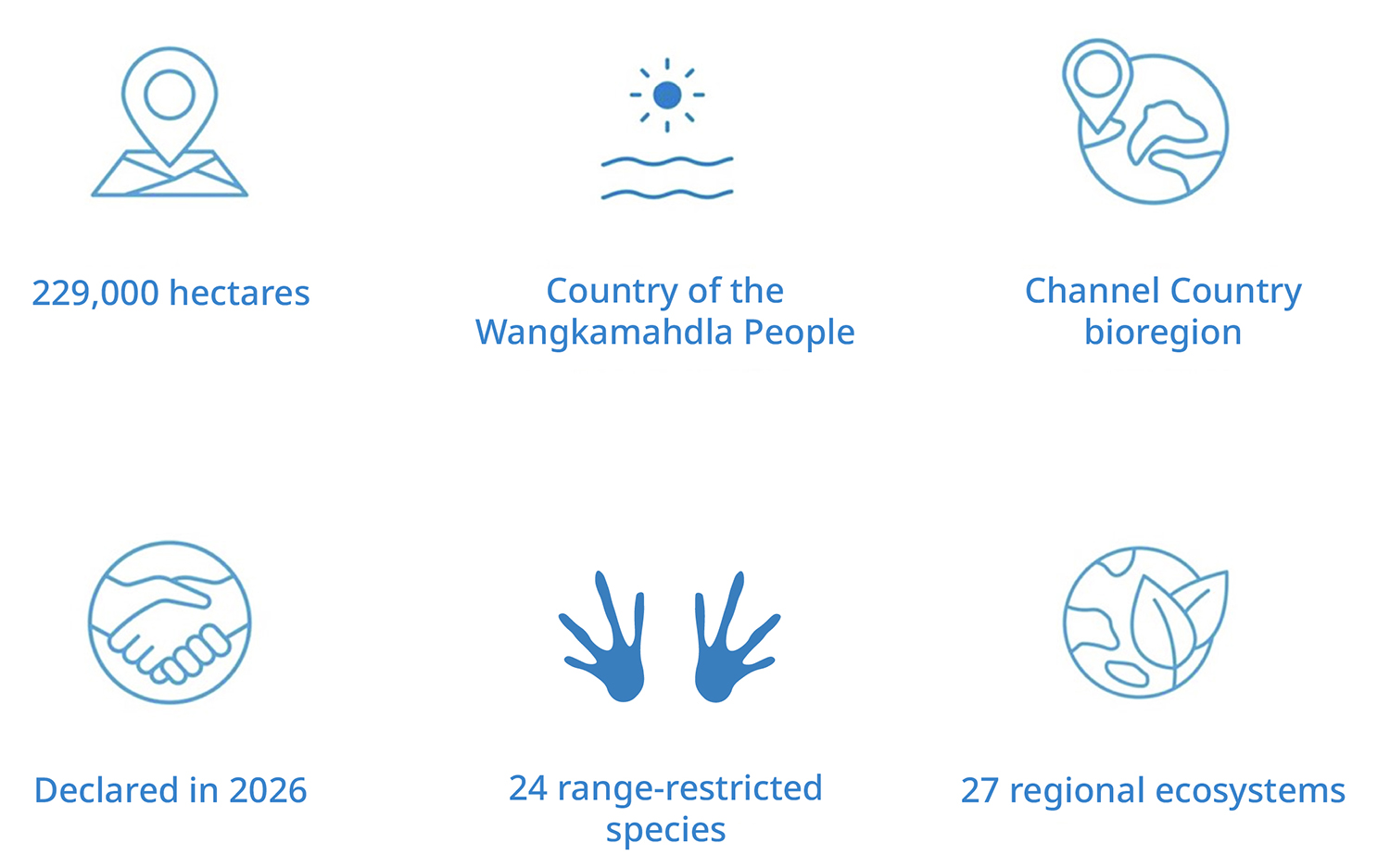
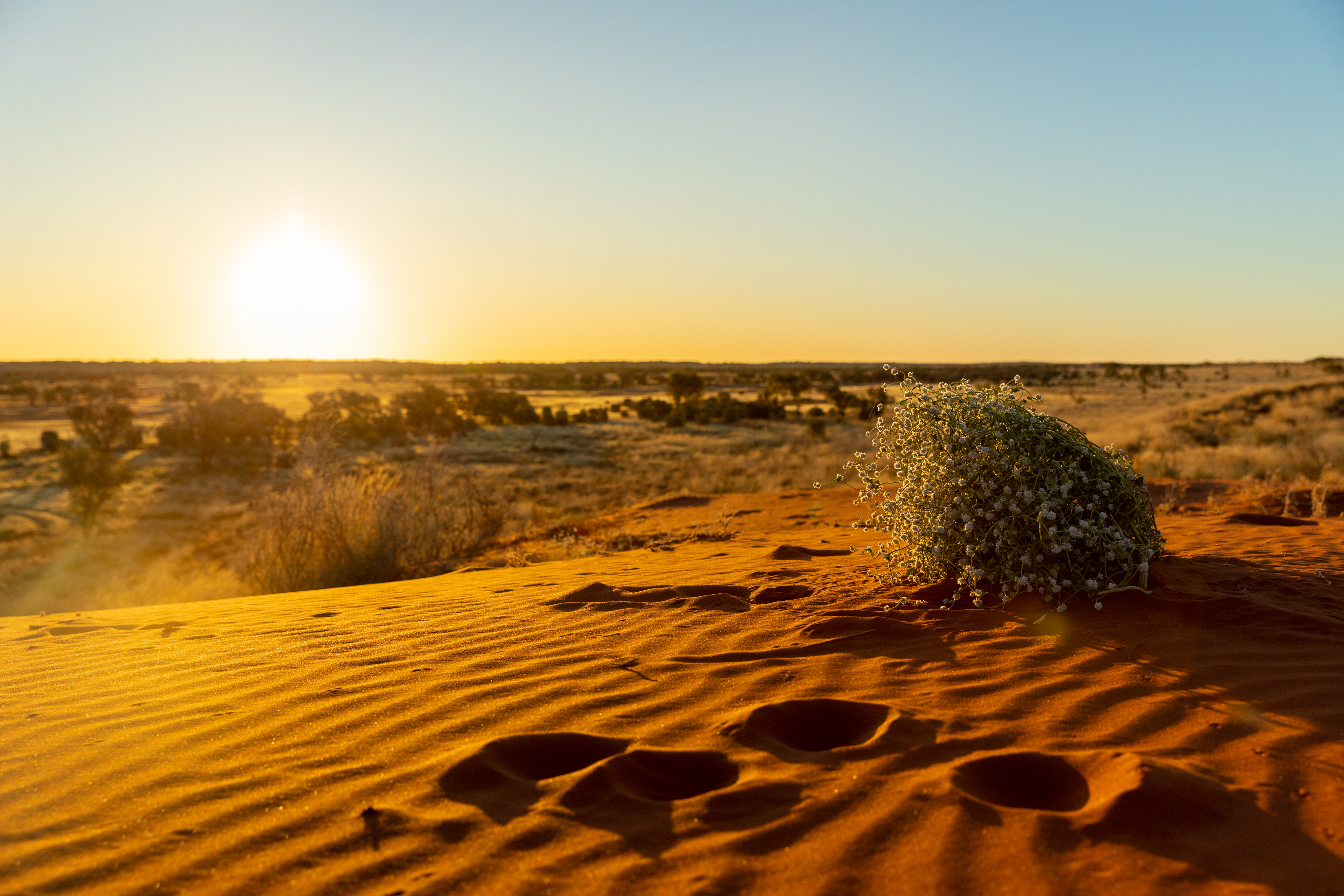
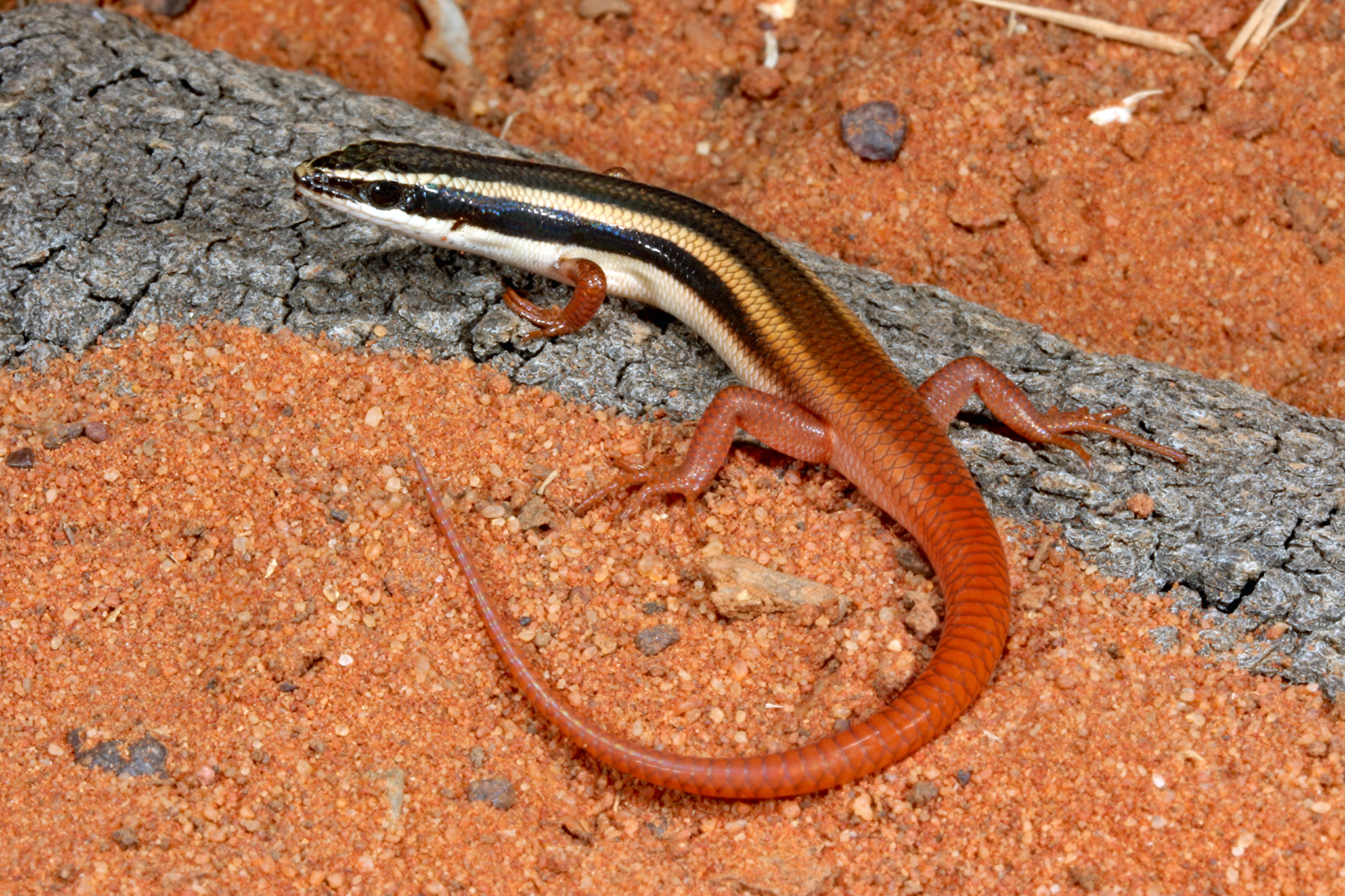
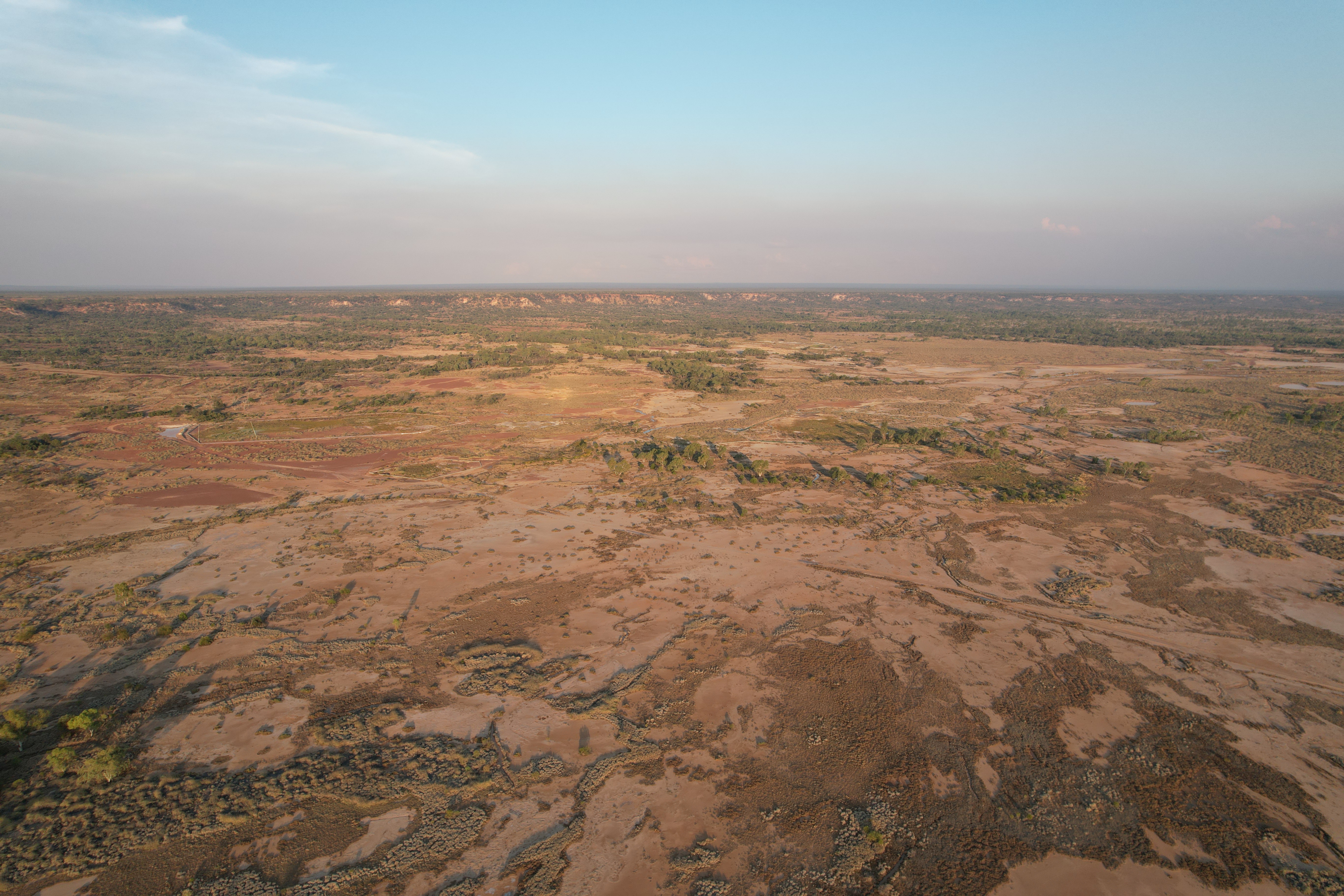
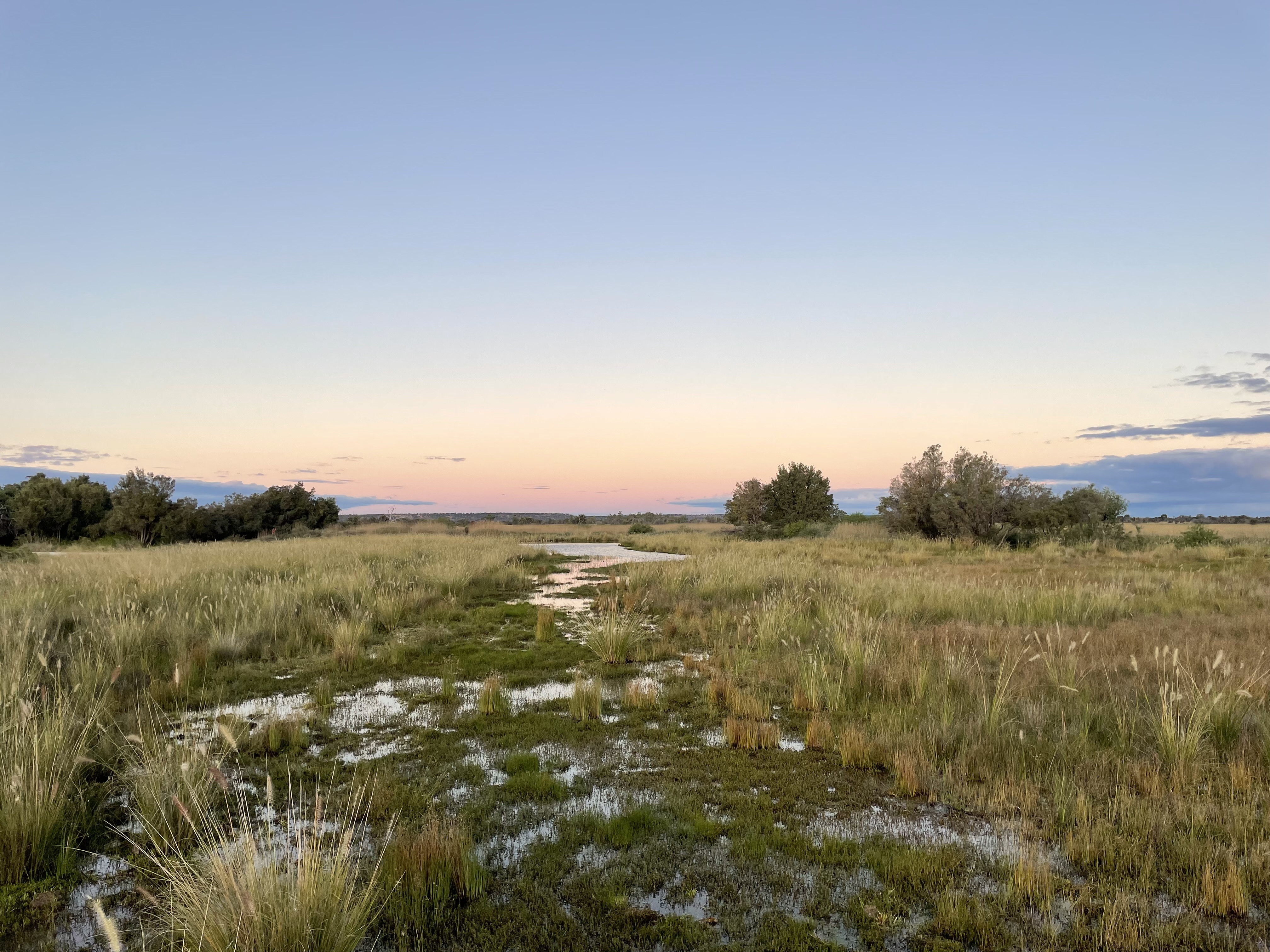
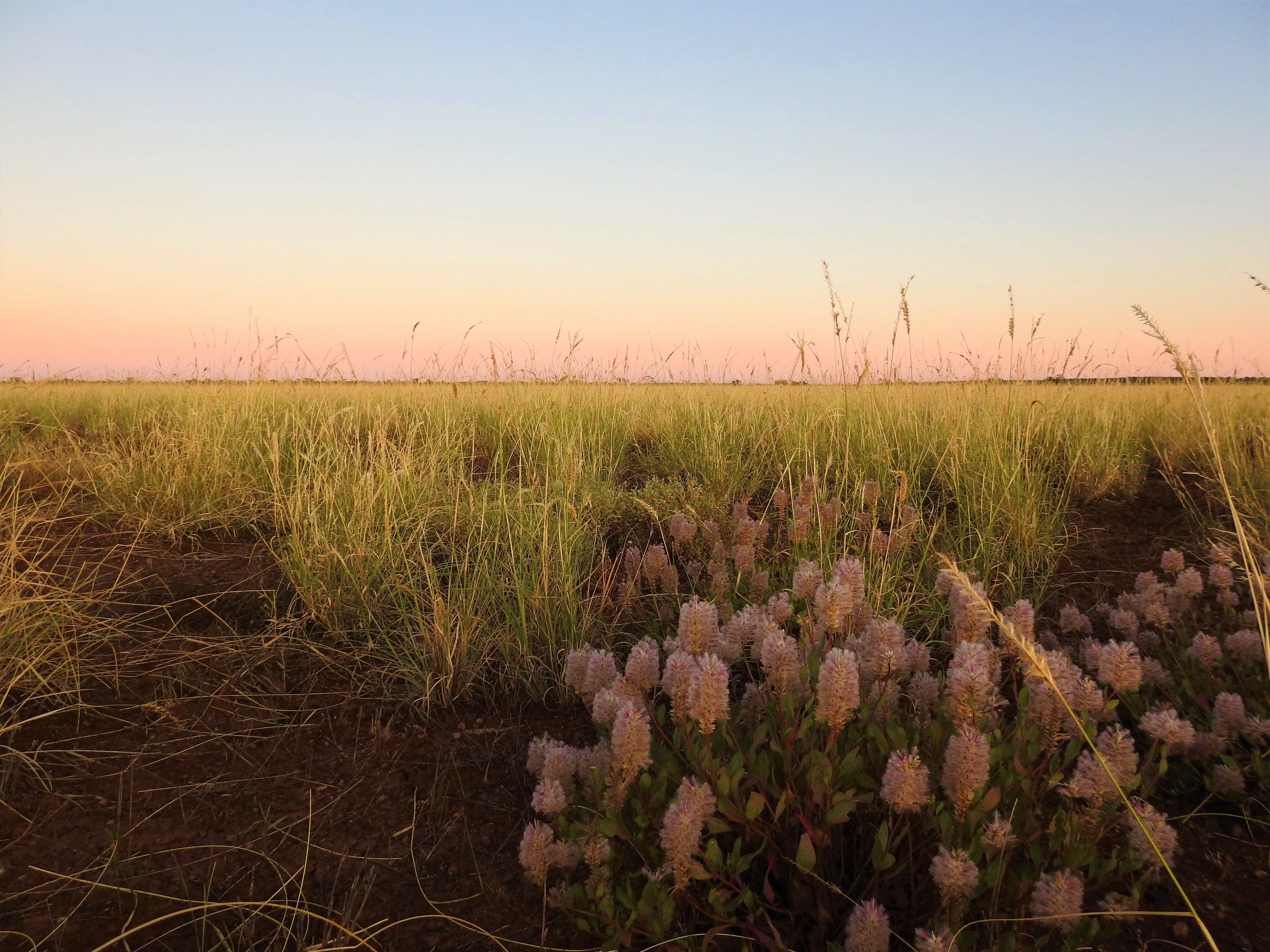
Pilungah Special Wildlife Reserve spans 229,000 hectares in Queensland’s Channel Country, southwest of Mount Isa. This landscape features red sandy dunes, Coolabah woodlands, and ephemeral waterbodies that serve as critical habitats for desert wildlife. The reserve is home to one of the world’s most diverse reptile populations, while its waterbodies provide essential refuge for migratory waterbirds after seasonal rains. Beneath the sands, seeds lie dormant for decades, waiting for the perfect conditions to thrive.
The property is culturally significant to the Wangkamahdla People, whose enduring connection to Country is evident in ancient rock art, sacred sites, and historic trade routes that once stretched from Queensland’s Gulf of Carpentaria to South Australia. Nearby, the Toko and Tooma Ranges hold fossils that date back millions of years, adding to the area’s extraordinary natural and cultural legacy.
Once known as Cravens Peak Nature Refuge, Pilungah Special Wildlife Reserve is now owned by Bush Heritage Australia and remains a vital sanctuary for the region’s unique biodiversity and cultural heritage.