Ipswich Connected Vehicle Pilot
The Department of Transport and Main Roads has paved the way for the arrival of new vehicles technologies by delivering Australia’s largest on-road pilot of connected vehicles, the Ipswich Connected Vehicle Pilot (ICVP) in partnership with Motor Accident Insurance Commission (MAIC) of Queensland, Telstra, Queensland University of Technology's (QUT) Centre for Accident Research and Road Safety Queensland (CARRS-Q), iMOVE Australia, Ipswich City Council and the Department of Infrastructure, Transport, Regional Development and Communications to deliver the Ipswich Connected Vehicle Pilot.
Connected vehicle technology, also known as Cooperative Intelligent Transport Systems (C-ITS), enables vehicles to talk to other connected vehicles, roadside infrastructure, and centralised traffic management systems to share awareness messages. The technology produces safety warnings for the drivers, such as those illustrated in the use cases tested in the pilot section.
The introduction of connected vehicles and infrastructure will change the way vehicles and our roads interact, and have the potential to enhance safety, reduce congestion, emissions and travel times. The Queensland Road Safety Strategy 2022-31 leverages new technologies and data, such as C-ITS road infrastructure, to set Queensland on the path to achieving a vision zero serious road trauma by 2050.
The ICVP ran between September 2020 and September 2021, involving 355 public. Participant vehicles were fitted with an antenna mounted on a roof-rack, as well as an in-vehicle communications box placed under the driver's seat and a display on the dashboard, which displayed the warnings.
Driving data from the use cases tested found a 20% crash reduction is possible, based on C-ITS being 100% present on the network. Results are now available on the iMOVE Australia website.
Examples of vehicle equipment used in the pilot:
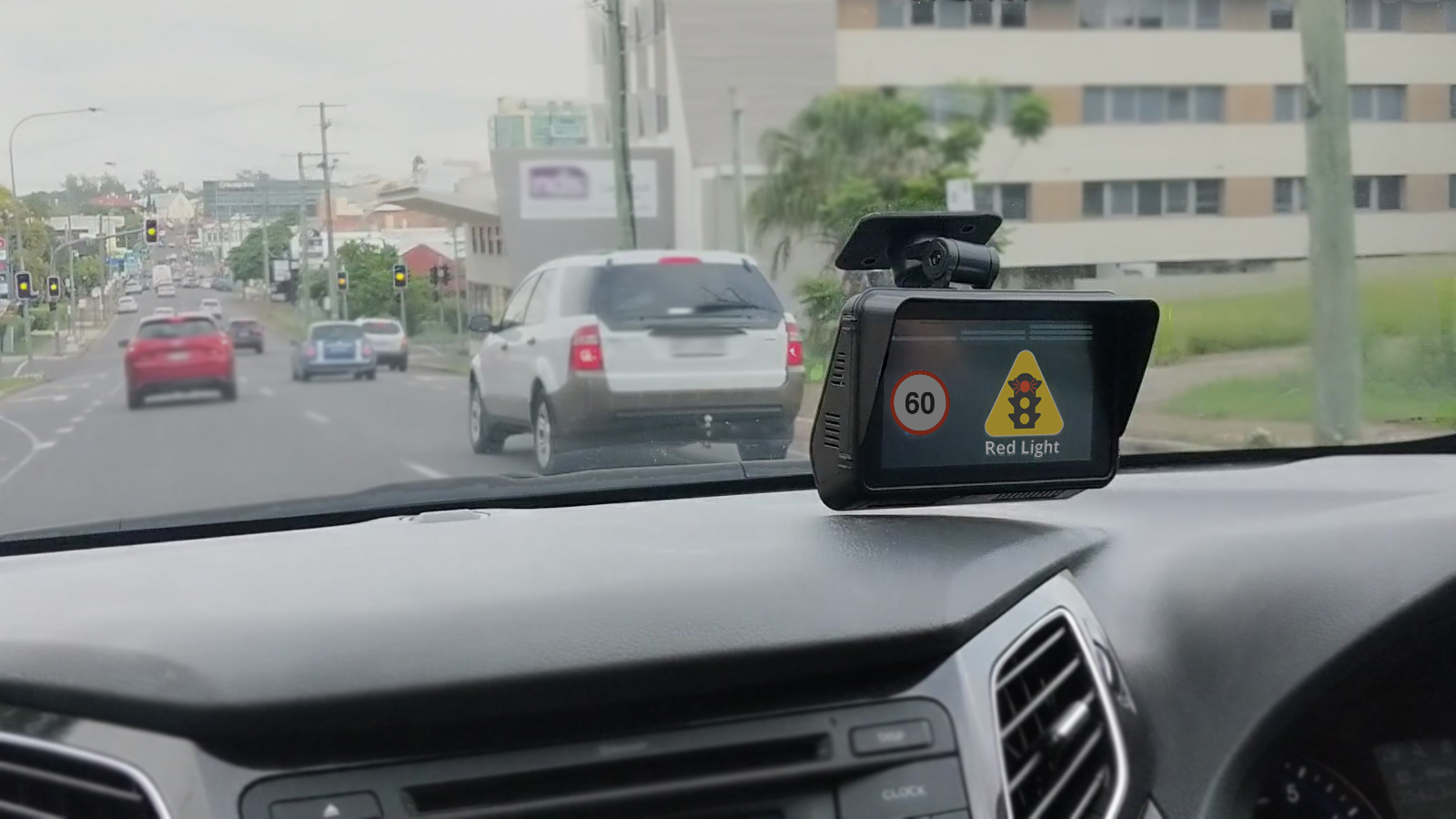
In-vehicle display showing the home screen of the installed display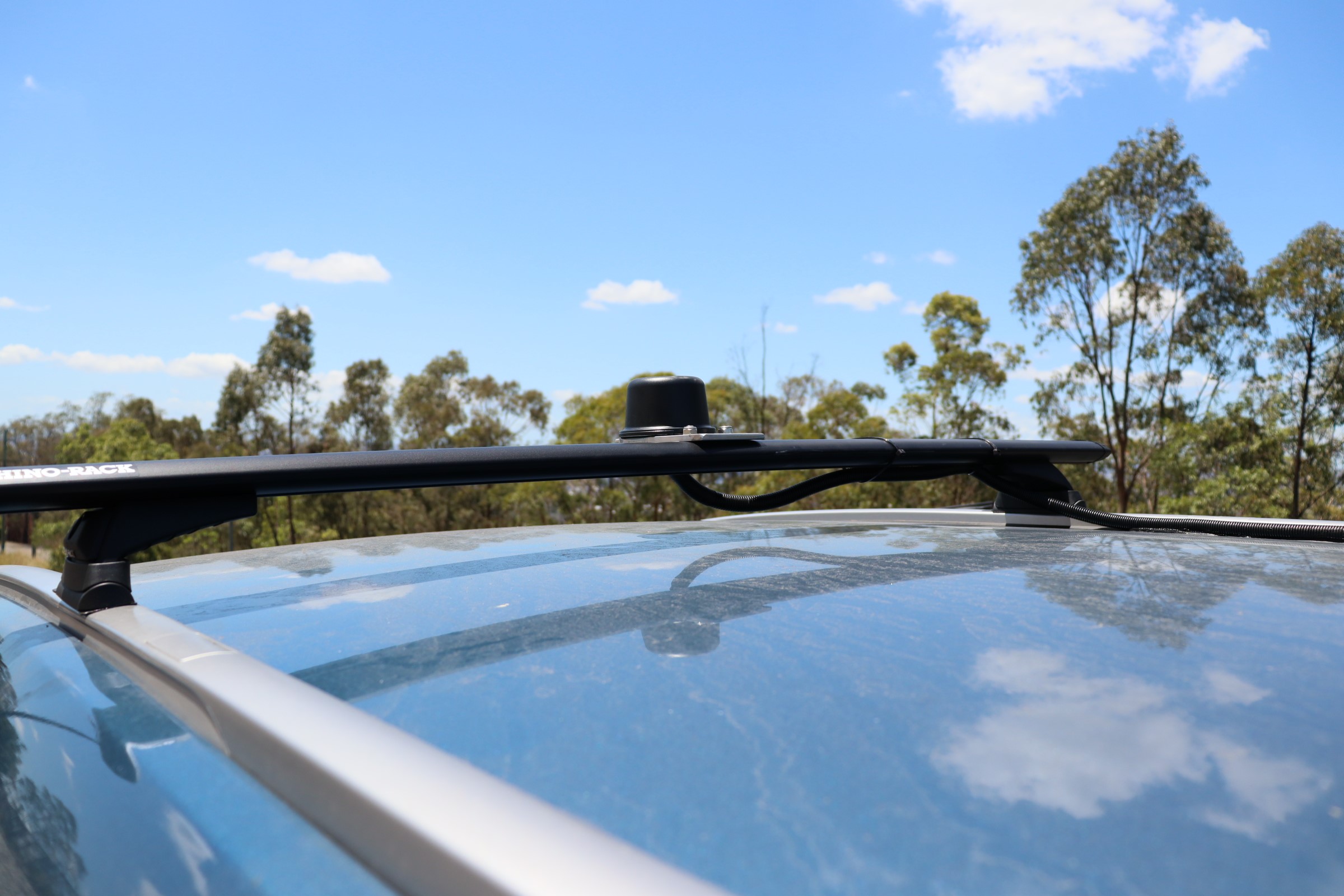
Roof-rack with antenna installed on vehicle roof 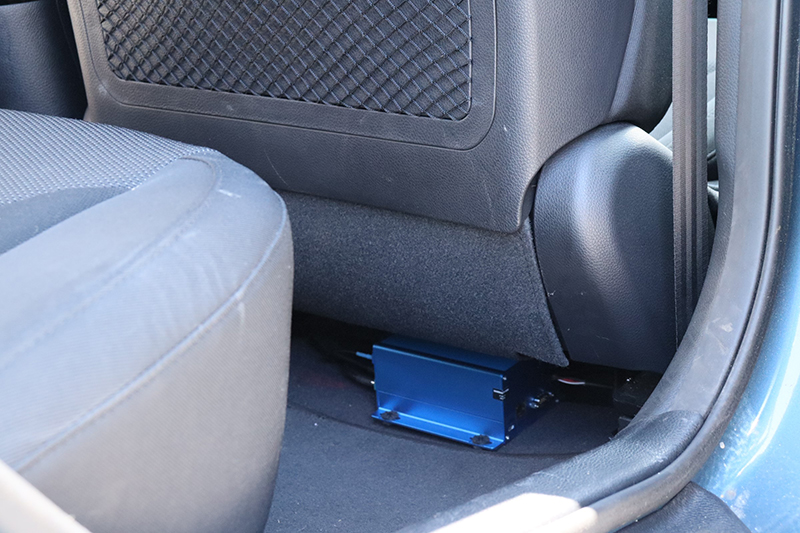
In-vehicle communications box installed under driver's seat
Participants were among the first in Australia to experience new driving technology and helped contribute to connected vehicle development and implementation. The safety findings from ICVP will also help to inform future research projects and government decision-making about the use of connected vehicle technology in Australia.
Use cases tested in the pilot
ICVP used vehicle-to-infrastructure (V2I) communication technology to provide drivers with safety alerts. The pilot had no element of vehicle automation—drivers always remained in control of their vehicles during the pilot phase. Different types of safety alerts were displayed in response to traffic conditions and vehicle behaviour. Drivers may take alternate or evasive action in response to an alert. The following videos demonstrate how each of the safety alerts operate and what the drivers experienced from inside the vehicle during the pilot.
This warning provides drivers with information about active, static or variable speed limits. It then alerts them if they are exceeding that limit.
In car view
A car is travelling along a road at 75km an hour as seen on the driver’s speedometer. The car passes a 60km an hour speed sign, and receives a slow down warning on an in-vehicle display tablet. The car slows then slows to 59km.
The car passes a school zone sign and receives a 40km ahead warning on the in-vehicle display tablet. The car slows to 40km an hour and the warning symbol changes to a smiley face on the display tablet.
Aerial view
A car is travelling along a road, behind a bus. The car receives an advisory message of the change in speed limit via a cloud based traffic management system. The car’s brake lights flash, and the car slows down.
The car receives a secondary advice message from the cloud as it enters a school zone and the speed limit changes to 40km an hour as shown on the school zone sign. The car continues through the school zone at the reduced speed.
To find out more visit www.qld.gov.au/cavi
This warning alerts drivers if it’s likely that they’ll drive through a red light ahead, unless they brake.
Aerial view
Two cars and a truck are approaching an intersection – a white car is approaching the intersection with a red light, and a red car and truck approaching the intersection with a green light.
The white car receives a warning message that they are approaching a red light, and are likely to drive through the red light unless they brake.
The white car brakes, and comes to a complete stop as the red car and truck cross the intersection.
In-car view
A car is travelling along a road, with a red traffic light visible ahead.
The driver receives a warning message via an in-vehicle display tablet that it is likely to run a red light unless it brakes.
The car brakes suddenly, and slows to a stop as seen by the reduction in speed on the car speedometer.
A red car passes in front of the driver from the right hand side and crosses in front of the car heading left.
To find out more visit www.qld.gov.au/cavi
This warning alerts drivers to upcoming hazards, such as water on the road, road closures, or a crash.
Aerial View
Two cars in each lane are travelling along a 2-lane road. The red car receives an advisory message of a hazard ahead via a cloud based traffic management system. The red car’s brake lights flash and slows down to safely pass a stationary tow truck with a broken down car on it. The green car brakes suddenly to avoid crashing into the rear of the tow truck.
In-car view
Two cars in each lane are travelling along a 2-lane road. We see the view of the red car at the rear.
The car receives an advisory message of a hazard up ahead on an in-vehicle display tablet. The car brakes smoothly and slows to safely pass a stationary tow truck with a broken down car on the back.
The green car in the left lane brakes suddenly to avoid crashing into the rear of the tow truck.
To find out more visit www.qld.gov.au/cavi
This warning provides drivers with information about an upcoming traffic queue.
Aerial view
A car is travelling along a 2-lane road, and receives an advisory message of upcoming roadworks via a cloud based traffic management system. The car’s brake lights flash, and the car slows down as it approaches a queue of stopped cars ahead.
In-car view
A car is travelling along a road at 98km, as shown on the car’s speedometer. The car receives an advisory warning on the in-vehicle display tablet indicating congestion ahead. The car reduces speed to 10km as shown on the car’s speedometer.
To find out more visit www.qld.gov.au/cavi
This warning alerts drivers to pedestrians or bicycles crossing at an upcoming intersection.
A number of vehicles are interacting at an intersection as a yellow car approaches indicating to turn right.
A large truck approaching from the opposite direction blocks the crossing pedestrians from the view of the yellow car driver.
The traffic lights, where 2 pedestrians are crossing, is communicating with an approaching car.
This message is sent out from a cooperative intelligent transport system, or C-ITS, unit connected to the traffic lights.
This car receives a message that the pedestrian crossing is in use, and to watch out for pedestrians.
The car waits for the pedestrians to cross the road and turns right safely.
In-car view
A car approaching an intersection with green traffic lights, indicates to turn right.
Oncoming cars and trucks to the right hand side of the driver’s windscreen, block the view of the driver of pedestrians already crossing the road.
The car receives an advisory warning on the in-vehicle display tablet indicating pedestrians and cyclists ahead, at the right-turn intersection.
Once the pedestrian and cyclist are clear of the intersection, the car turns right safely.
To find out more visit www.qld.gov.au/cavi
This warning alerts drivers to upcoming roadworks, giving them time to slow down or change lanes.
A red car is travelling along a 2-lane road, and receives an advisory message of upcoming roadworks via a cloud based traffic management system.
The car’s brake lights flash, and the car slows down as it goes past a road work ahead, slow down, 60km signs.
The car then approaches a lane closed, 40km sign indicates right, and moves to the right hand lane.
The car then approaches a 40km, roadworks sign, and slows downs as it passes roadworkers, separated from traffic by traffic cones.
In-car view
A car travelling along a 2-lane road passes a road work ahead, reduce speed, 60 km roadwork sign on the left hand side of the road.
The car receives an advisory warning on the in-vehicle display tablet indicating roadworks ahead and reduces speed.
The car approaches a lane closed, reduce speed, 40km sign and receives a second advisory warning
indicating the left hand lane is closed, and to reduce speed to 40km an hour and roadworkers are on site.
To find out more visit www.qld.gov.au/cavi