R1063—Burnham Regenerative Production Project
Fast facts
- Investment: $787,000
- Location: Stonehaven, Thangool, Central Queensland
- Proponent: GreenCollar
- Duration: 10 years
- Method: Avoided clearing of native regrowth
- Co-benefits
- Great Barrier Reef
- Native vegetation
- Threatened ecosystems
- Threatened wildlife
- Diversity and human rights
- Employment and skills
Video: Burnham Regenerative Production Project
Dan and Emma-Jane Burnham are diversifying their successful grazing business through their avoided-clearing project, funded by the Land Restoration Fund’s first investment round.
Dan – “In 2004 my parents bought Stonehaven and first three years we were continuously grazing, and we started noticing a lot of country that was getting over-grazed so we set it up as a more regenerative style of grazing and we really had family support to change that grazing management and we noticed our country responding better to that.”
Dan – “We’re diversifying our business with carbon farming in a dry time which allows us to knock our stocking rate down, and if our country is not handling it, if it’s dry if our rainfall is down, we can lighten off our beef cattle and still have income coming from our land.”
Emma-Jane – “Having that set income as well allows us to forward plan on our budget.”
Emma-Jane – “Our project is an avoided clearing project where we cleared it seven or eight years previously and then we cleared another seven or eight years and now we’re avoiding that third cycle.”
Emma-Jane – “Trees are a part of any ecosystem and it’s that balance, so it’s not a case of no trees and it’s not a case of all trees, but to balance them effectively together to maximise the production and the ground cover.”
Dan – “I’m a fifth generation farmer and we’ve made the change here this generation.
Emma-Jane – “We have the evidence, we can show that these paddocks which have tree are actually giving us more yield as we continue.”
Joanna – “Carbon farming provides multiple benefits to landholders including a stable long-term income, improved land health and increased biodiversity, and most importantly these benefits don’t come at the expense of the existing operation. Carbon projects are integrated with the existing operation and so under most carbon project management you don’t need to de-stock.”
Emma-Jane – “Having effective ground-cover is going to improve your soil health which then leads to more yield and carrying capacity on your country.”
Emma-Jane – “Being sustainable and profitable, to us those are the same, they go hand in hand and we don’t see them as being separate.”
Emma-Jane – “The Land Restoration Fund is rewarding more than just sequestering carbon, because holistically a cattle property or a business is more than just one aspect and if we can be rewarded for improving our biodiversity and creating those habitats, healthy ecosystems, then we’re benefiting long-term.”
Threatened species habitat and sediment reduction flowing into the Great Barrier Reef
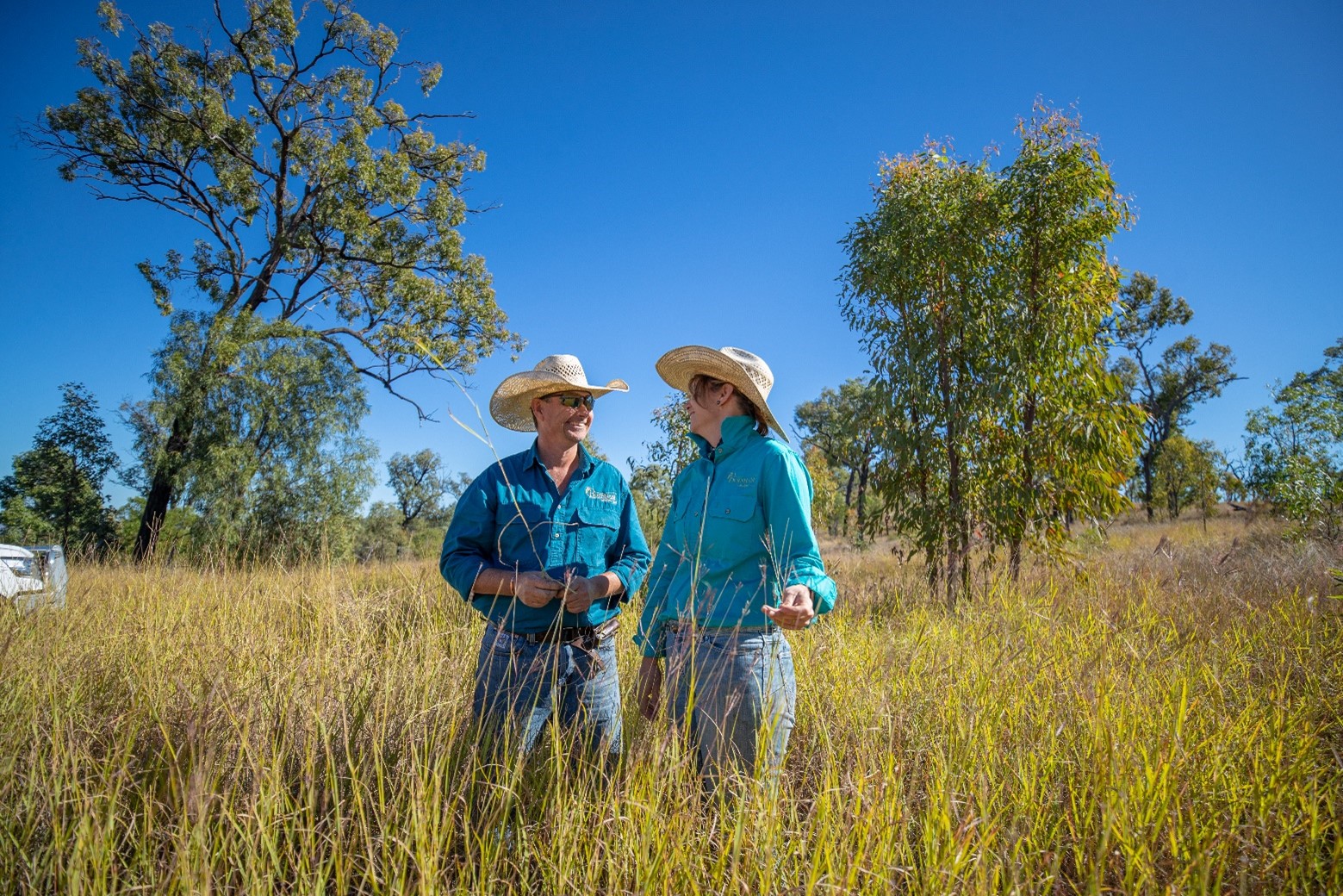
The Burnham property, comprising prime agricultural country in the Banana Shire, benefits from excellent climatic conditions and good annual rainfall. The land managers are committed to sustainably breeding and growing cattle while caring for land that has historically been cleared for cattle grazing.
The Burnham Regenerative Production Project (the Project) will retain and regenerate 190 ha of native vegetation through cessation of broad scale clearing within the project areas and implementation of time-controlled grazing to ensure ground cover and soil structure is maintained.
Project benefits
The property contains 5.7kms of riparian frontage which flows into the Fitzroy River and on to the Great Barrier Reef. Management activities to retain mature vegetation along creek banks will improve streambank stability, protect aquatic habitat and reduce sedimentation flowing to the Reef.
This project will improve the extent and condition of koala habitat outside Southeast Queensland.
The Project will invest in the local community by buying project materials for infrastructure upgrades and installations from local businesses and using local contractors to conduct ongoing management of non-native plants and feral species.