R1038—Beef and Conservation for the Future (BC4)
Fast facts
- Investment: $2.1 million
- Location: Goondicum Station, Central Queensland
- Proponent: GreenCollar
- Duration: 10 years
- Method: Avoided clearing of native regrowth, Human-induced regeneration of a permanent even-aged native forest 1.1
- Co-benefits:
- Great Barrier Reef
- Threatened ecosystems
- Threatened wildlife
- Native vegetation
- Diversity and human rights
- Employment and skills
- Resilience and connectivity
Video: Grazing and regenerative agriculture, Central Queensland
Rob and Nadia Campbell are passionate about raising cattle in a natural environment. In partnership with GreenCollar and the Burnett Mary Regional Group, the Campbell’s are demonstrating how the co-existence of grazing and regenerative agriculture has supported their farm business.
Rob “Goondicum is situated right at the head of the Western Branch of the Burnett river in a big volcano crater. The Campbell family’s been here for five generations, and we run timber and cattle, and everything’s living quite comfortably together.”
Nadia “So our operation here at Goondicum is largely focused on co-existence grazing, seeing us run Brangus cattle in conjunction with looking after our environment and the wildlife.”
Nadia “The LRF and carbon farming presented an opportunity for us to build on what we’re doing here and create new regeneration projects.”
“We’re a member of our peak natural resources group, the Burnett Mary Regional Group, and they introduced us to the concept of carbon farming some years ago and that’s how we met GreenCollar, and in that time we’ve been working closely with GreenCollar to bring this project together.”
Jane – “GreenCollar can help landholders looking to do a project by assessing their property to see if they’re eligible for a project, by registering their project with the clean energy regulator, and then monitoring their project to make sure it’s on track”.
Nadia – “So the beauty of our carbon project working with the LRF is that they’re not two mutually exclusive things with our production of beef. They co-exist and we’re actually seeing and we’re actually seeing an improved environment for our beef because of the project.”
Linda – “The Land Restoration Fund values projects like the one here at Goondicum because over and above storing carbon, it delivers multiple benefits. It delivers benefits for the farm, the land, for regional communities like employment and training, and also benefits for the broader Queensland community, things like creating threatened species habitat and improving the quality of water that flows into the Great Barrier Reef.”
Nadia – “Not only is it great to know that you’re increasing the habitat for these threatened species, but it’s also great to be able to look out your front door and see the environment improving and that’s certainly great from a mental health perspective when we’re seeing drought occur more and more often”.
Rob – “The best part about carbon is it gives you a backup on-farm income. It’s a bit like a check coming in every year so you can develop more land sensibly, you can educate your children at school, you can set up better water infrastructure like we are at the moment.
Nadia – “A better quality environment means less overheads for us in terms of land management, and so by improving the canopy coverage and increasing the tree growth and regenerating large areas of forest, we’re seeing those rewards.”
Nadia – “I’d encourage any other landowners and especially graziers to look into the LRF and what’s available, and enhancing the biodiversity on their own properties and the benefits they can bring from that.”
A multi-generational family of graziers in Central Queensland is gaining many benefits from their environmentally sustainable approach to beef farming through land regeneration and carbon farming practices.
Goondicum Station, located at the head of Burnett River near Monto in Central Queensland, has been family- owned and operated for over 150 years. During the 1920s–30s, many trees on the property were ringbarked (girdled) and cleared, as was common practice at the time.
Creating harmony between grazing and land regeneration
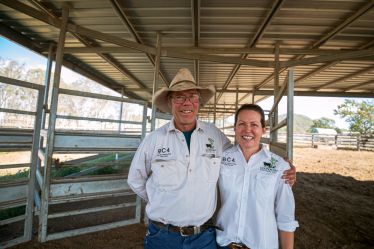
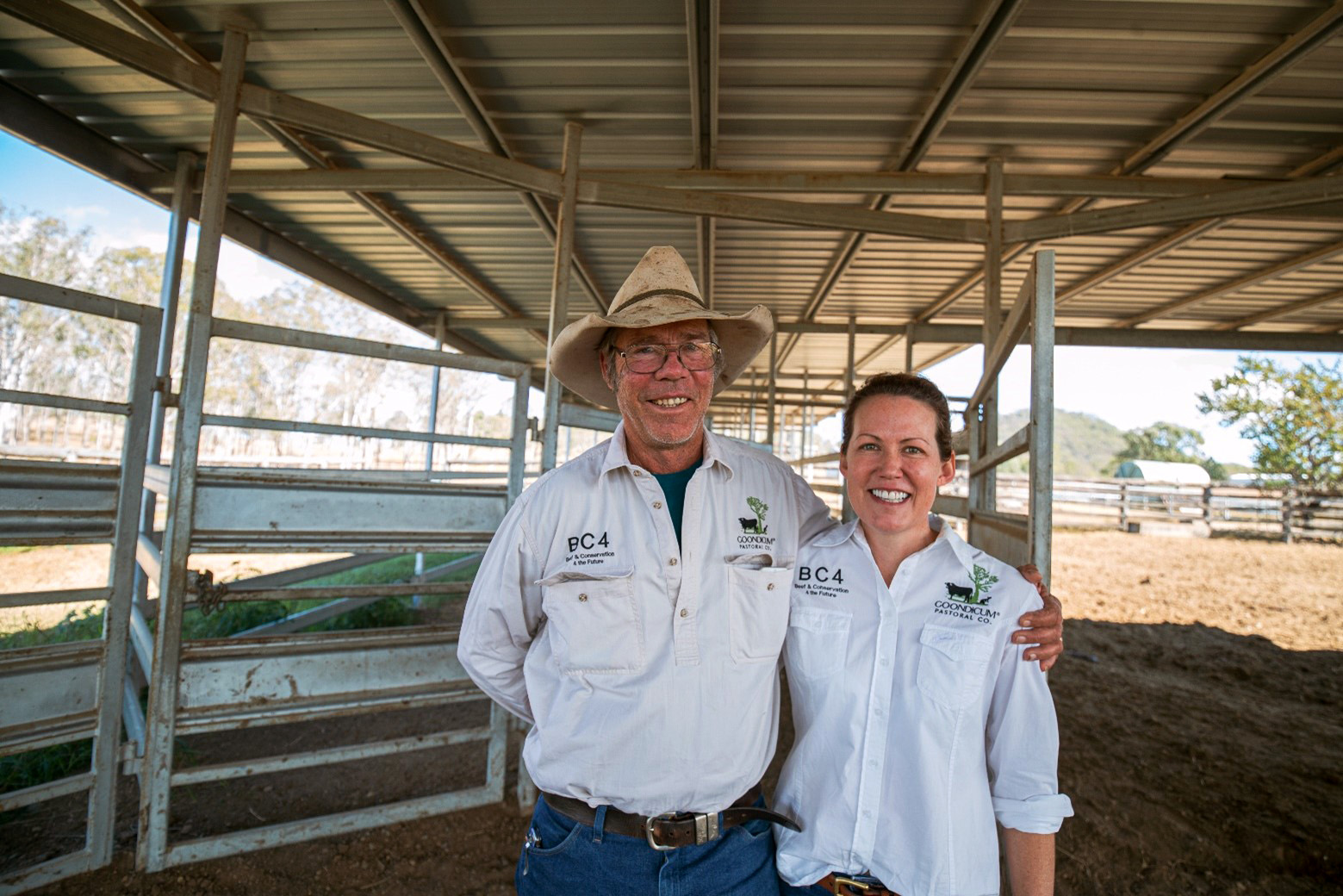
Today, the owners of Goondicum Station are passionate about raising cattle in a natural environment. As a result of their ongoing efforts they are producing high quality, hormone-free and 100 per cent grass-fed beef for several major markets around the world.
This success is attributed to the use of carbon regenerative farming methods that produce rich soils and better-quality feed grasses. Thinning processes and ‘cool fires’ are also used on the property to maintain a balance of trees and pasture and create an all-round healthier environment.
Through the partnership between Burnett Mary Regional Group, GreenCollar and the Goondicum Pastoral Co., the business is generating carbon credits through the Australian Government’s Emissions Reduction Fund. This is achieved by regenerating parts of the property where vegetation has previously been suppressed and managing the timing and extent of grazing by their cattle. Both methods increase carbon abatement and storage and prevent the release of emissions from clearing native vegetation.
Project benefits
The co-existence of grazing and regenerative agriculture has made Goondicum Station profitable, even with less cattle per hectare compared to 25 years ago.
Achieving the right balance between grazing and regenerative agriculture has allowed the business to increase their commercial viability as paddocks with more trees grow better quality feed grasses than cleared land and lead to improved nutrition, healthier cattle and increased profit margins. The business continues to invest in the ongoing conservation of their property from their own profits and income generated from carbon credits. Goondicum Station also now has healthier soils and native grass pastures, increased wildlife and wildlife habitat including some endangered species, as well as financial benefits from commercial timber operations.
Educational investment has also been a focus for the business, with university students regularly visiting to observe and study the local wildlife residing on the property. Learnings from their approach to environmentally sustainable farming are shared with other farmers and graziers to foster a long-term profitable agricultural industry, while regenerating natural resources and combatting climate change.