Rangers engaging community and young people
Queensland Indigenous Land and Sea Rangers play an important role in their local communities through modelling leadership, learning and cultural connection, and assisting with inter-generational knowledge sharing.
Engaging with community
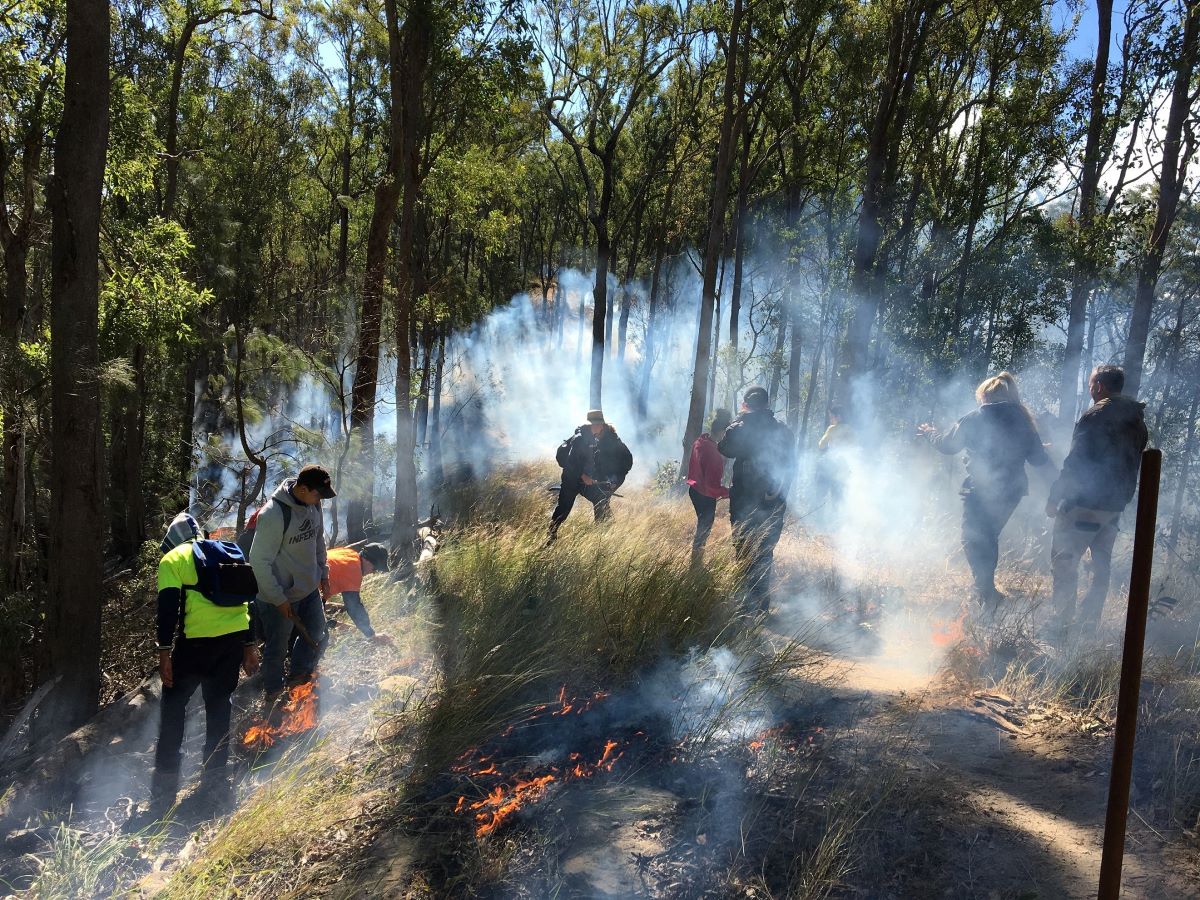
Rangers work closely with their Elders in planning and caring for Country and engage with their communities and visitors through ceremonies, events, and activities to share knowledge and understanding about caring for Country.
Sharing traditional knowledge
Bunya Peoples’ Rangers help their community, and other First Nations rangers and communities, to reconnect with culture and Country. They also share their knowledge to help visitors learn about First Nations culture and heritage.
Gummingurru—sharing culture
We’re at Gummingurru, Gummingurru is a staging point or initiation ground for people to come through the rites of passage, young men, kipa, to go onto manhood.
Many people from many tribes would pass through this ceremonial ground on their way to the larger gatherings up at the Bunyas. The site itself has been dated between 3 and 6 000 years old.
It’s quite significant culturally to us, and we’re very lucky to have it… and the reason why we still have it today is because of a very curious man, and his name was Ben Gilbert. In the late 40s when Ben returned from the second World War, essentially, Ben purchased this property. His daughter hadn’t returned one evening and the rule was back then to be home at dark.
So, he asked ‘Where have you been’, she said ‘I’ve been playing down in the fairy rings’. He investigated; it was a lot more heavily timbered around here back then. He sought advice of Queensland Museum and also the University of Queensland. They came out and said you are looking at a relatively intact initiation ground, it’s highly significant, there is not many left around.
Ben being a curious man, that wasn’t enough to satisfy his urge to find out more, so he found my great uncle Bunda. Uncle Bunda as a young boy, his father was a Goondir or Medicine Man and he used to come and put boys through ceremonies here. Uncle Bunda recalls when coming here as a young fella to the main camp and he knew some of the stories of the site. He shared them with Ben in the early 50s and they actually had a ceremony on the site. Uncle Bunda gave him the name Banda which means ‘Protector’, since that time he tried to give the land back, but it took up until the late 90s for them, for Ben to be able to have, to hand it back to us. We have been continuing sharing our culture with people, to promote the good things in our culture.
There is a lot of yuree – people usually think of totems. Totems is more like an American term but in our language, we say yuree. What we are looking at here is a creator being and this Djakahan that some people know as the rainbow serpent. And the reason why the rainbow is because Djakahan can travel overland in spirit form in rainbow because rainbow is associated with water. Also, we have a waterhole which you may have seen depicted in Indigenous art of concentric circles. These two always go together and water is central to all life. Djakahan travels through water ways and through the rainbows. And if you look back, this is the head here and then you can see the body winding back but her belly is engorged and what that’s saying is there is a nest of eggs in her belly – and that’s the people, the unborn people of the tribes. And as she travels through country creating country, she put people on country to look after country.
What we are looking at here is a turtle. And this yuree is actually orientated to the east. So, reason why we know it’s a sea turtle is because as you can see, he’s got no neck and he’s got flippers. This is yuree of the saltwater people that travel up and if you look back towards the water hole you see the eggs. There is little clusters of eggs. Once again that representing all the different mobs on the way back to the coast.
It forms part of my identity, and it strengthens my connection to the place, so it feels good to be able to tell our story, and a rare story – mind you, for back then, people didn’t necessarily have a great attitude towards Indigenous stuff …. and still to this day currently there’s a lot of bad attitude, and that’s what we want to do promote the real culture.
Educating the community
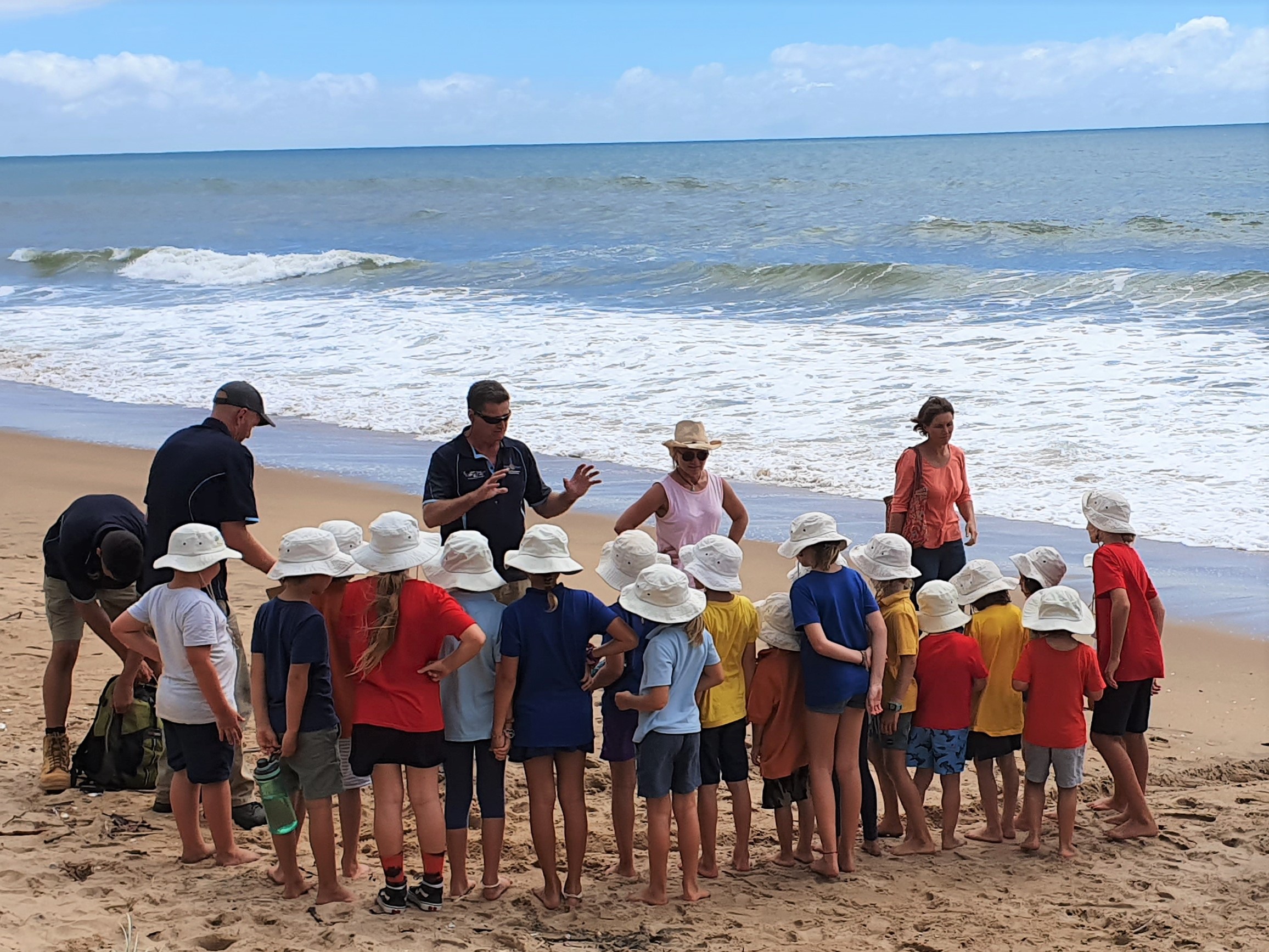
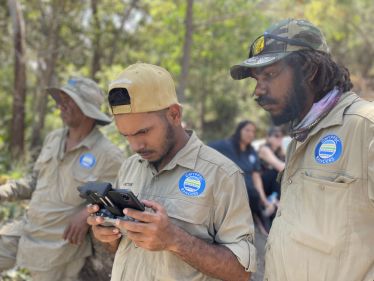
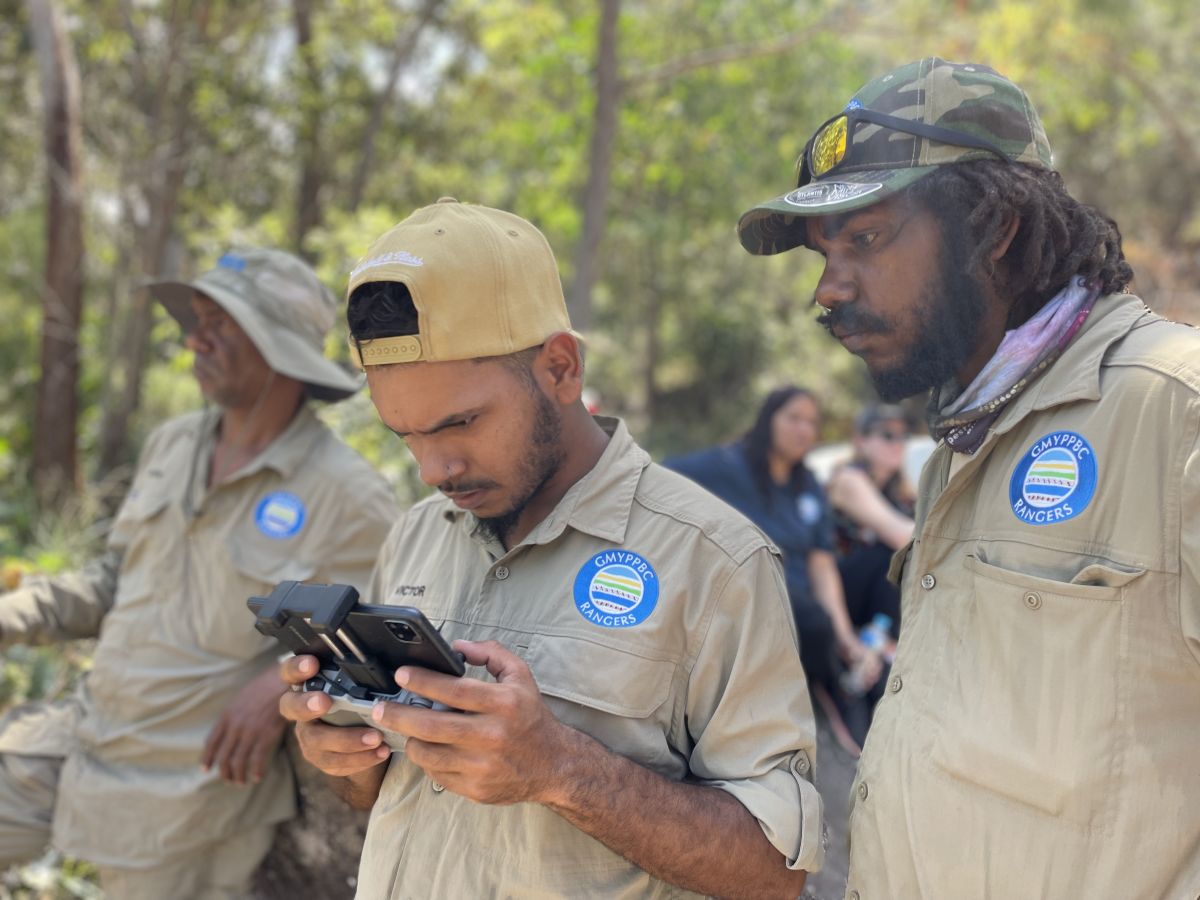
Ranger groups play an important role in educating their communities. Gunggandji-Mandingalbay Yidinji (GMY) rangers use drones to monitor the presence and behaviour of crocodiles in their area. They keep their community informed and aware about crocodile safety through social media, community events and school visits.
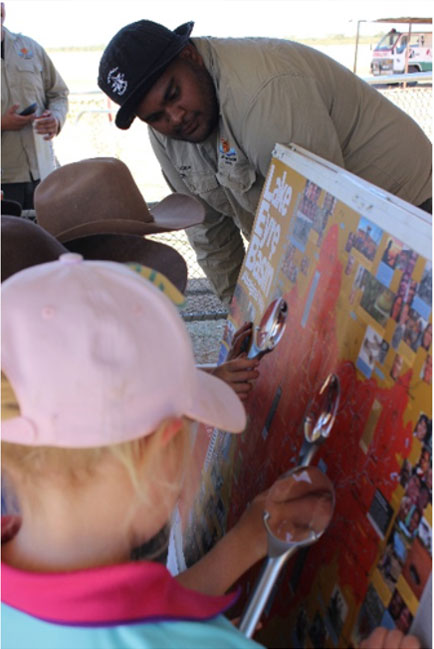
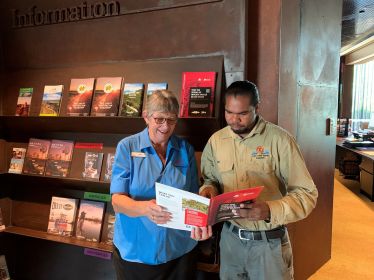
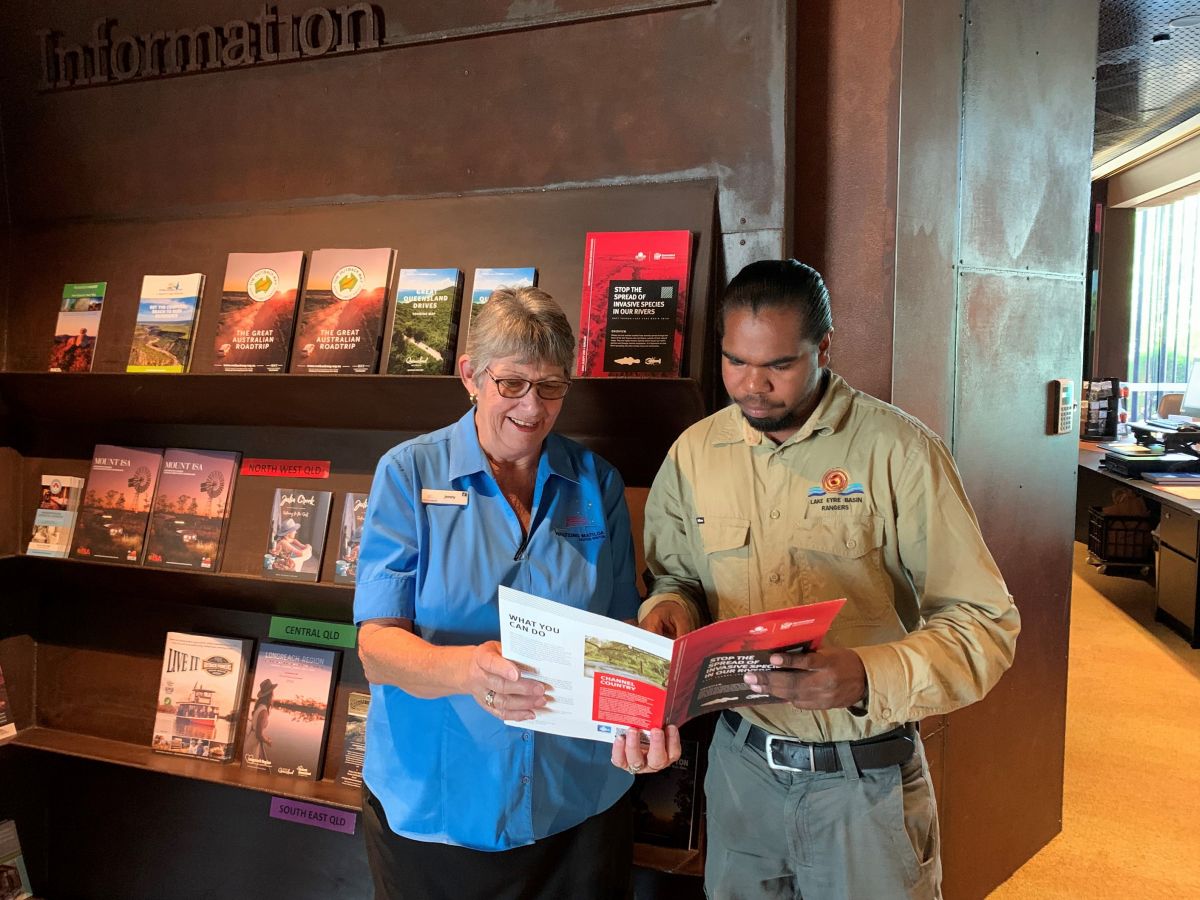
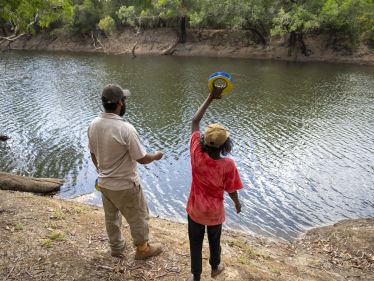
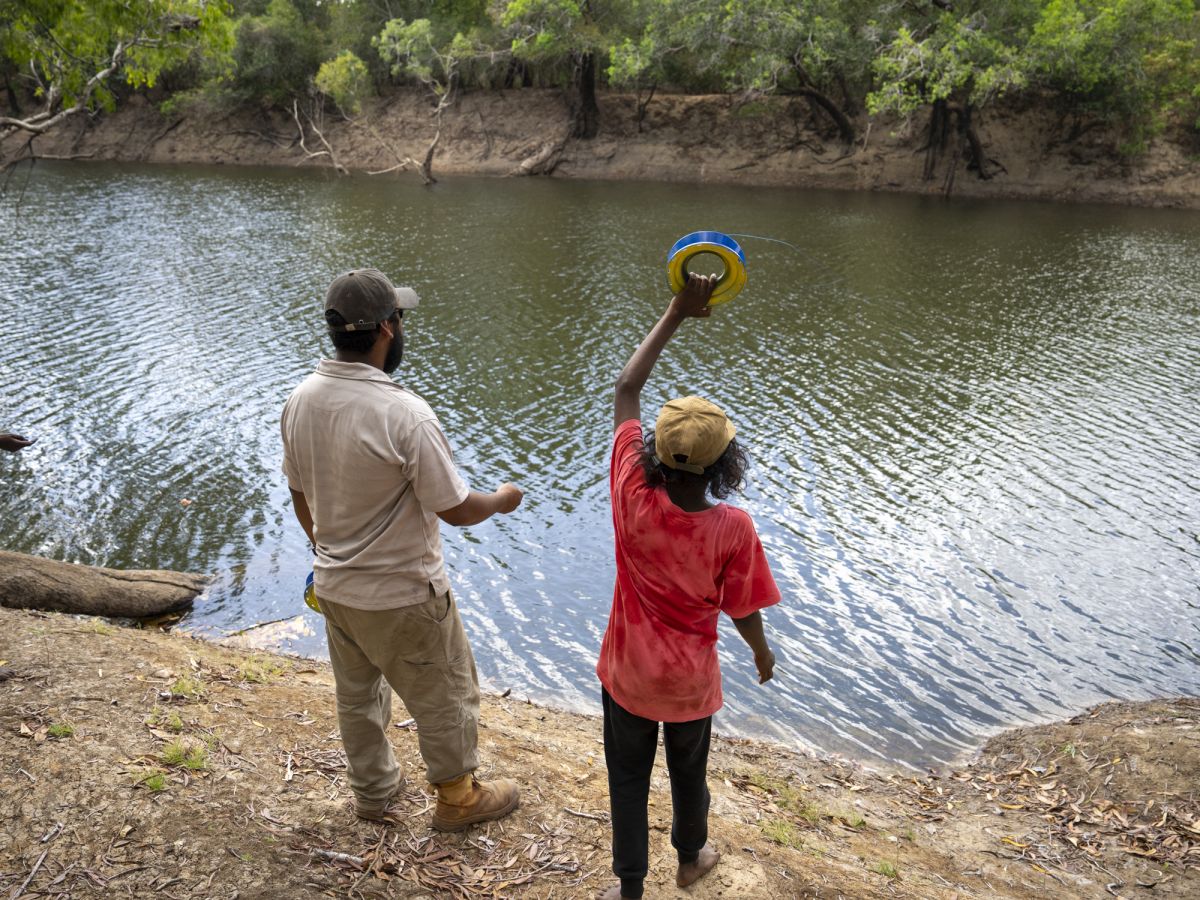
Lake Eyre Basin (LEB) rangers and Indjalandji-Dhidhanu (IDAC) rangers manage the impacts of visitors on Country through engagement and education. They help visitors understand how to avoid spreading invasive species 3.9 MB) when fishing in the Channel Country, Lake Eyre Basin (Kati Thanda).
Engaging with young people
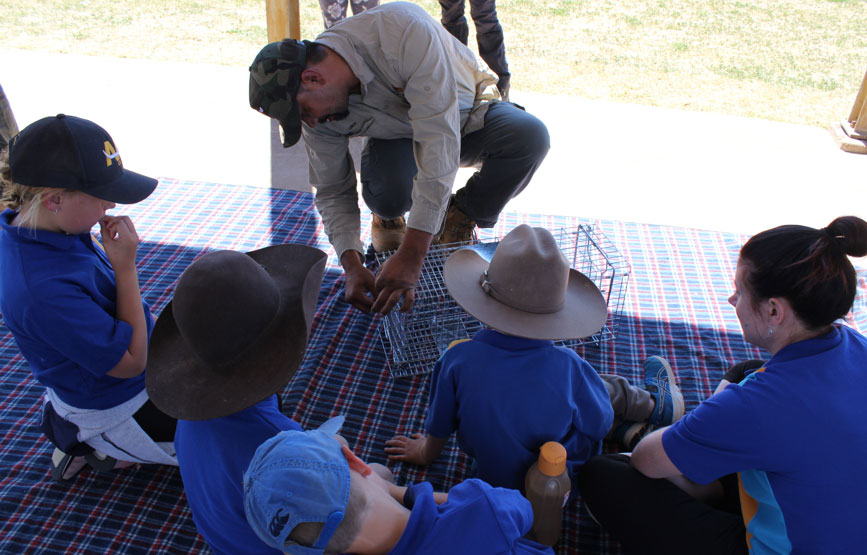
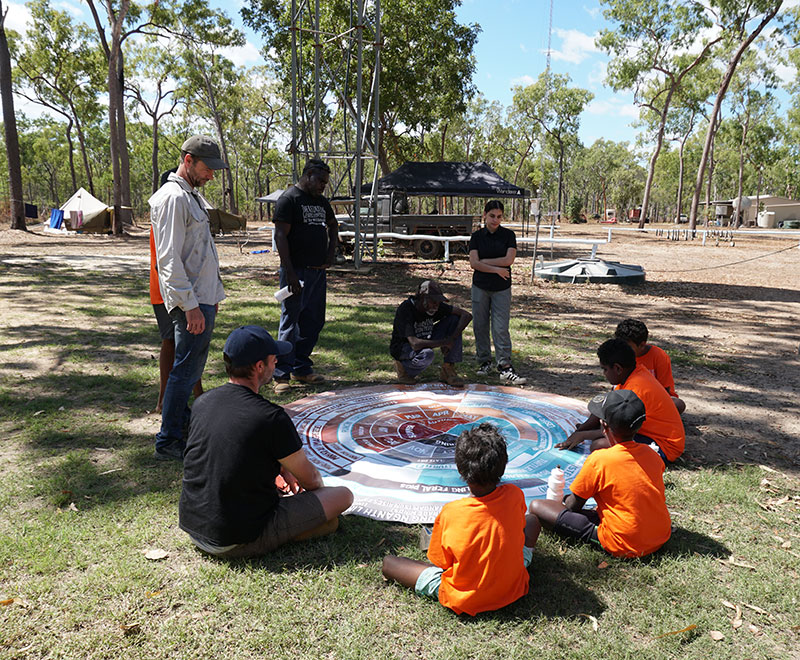
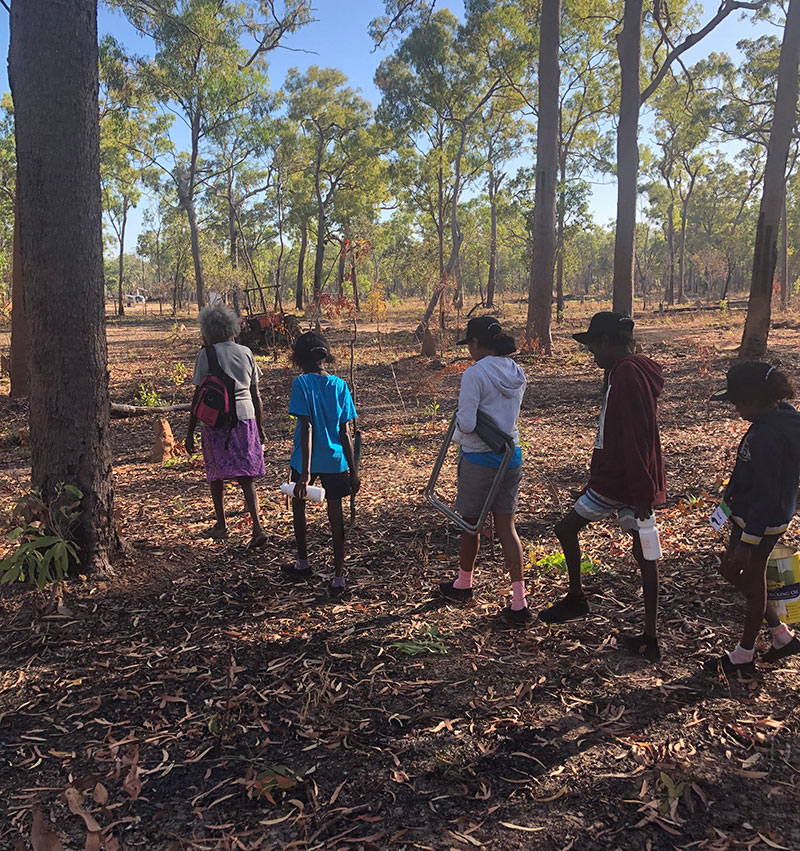
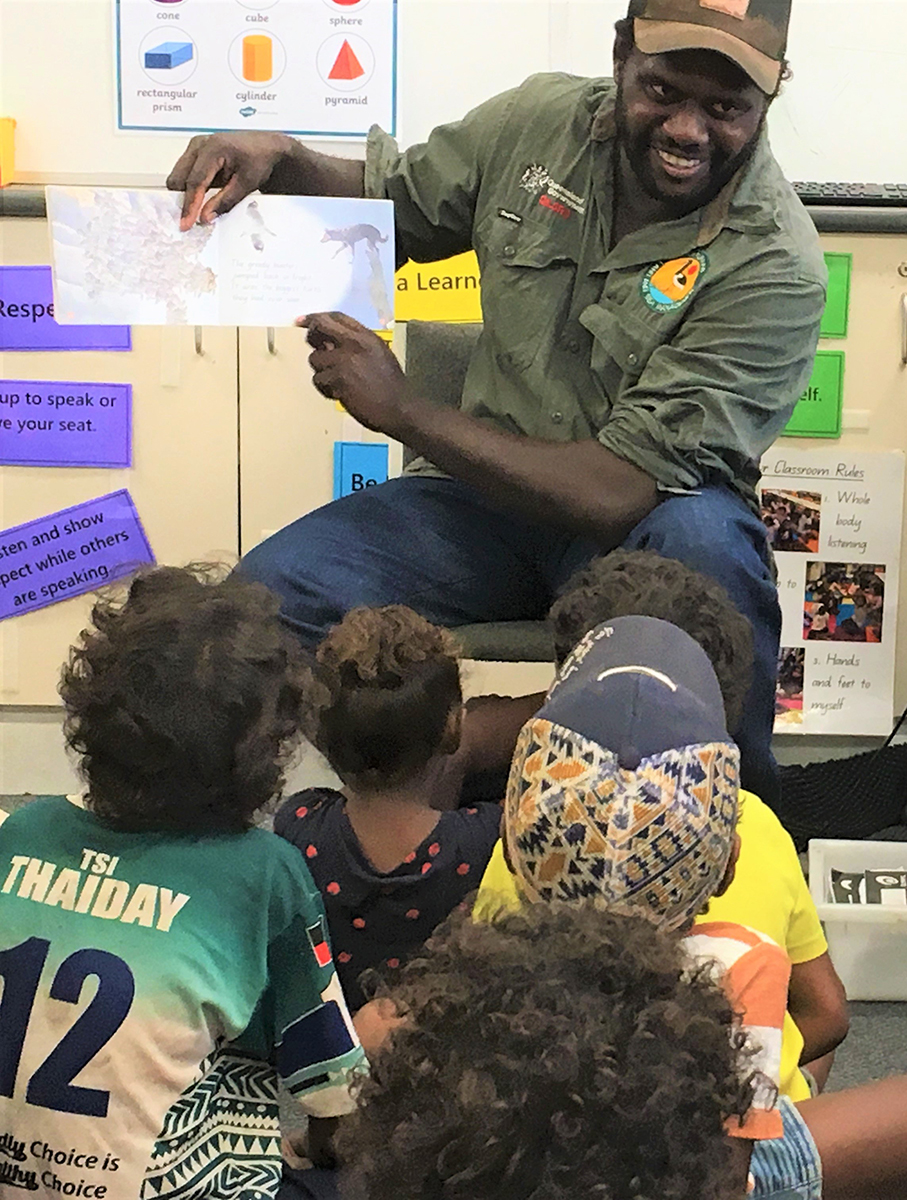
Many ranger groups are dedicated to youth engagement programs, aiming to educate young people in their communities about the vital importance of caring for Country.
These programs play an important role in passing down traditional knowledge and First Nations perspectives, ensuring that the younger generation understands and values these cultural insights.
Through their engagement with young people, rangers become influential role models, inspiring young people to stay connected to their heritage and Country.
Primary students
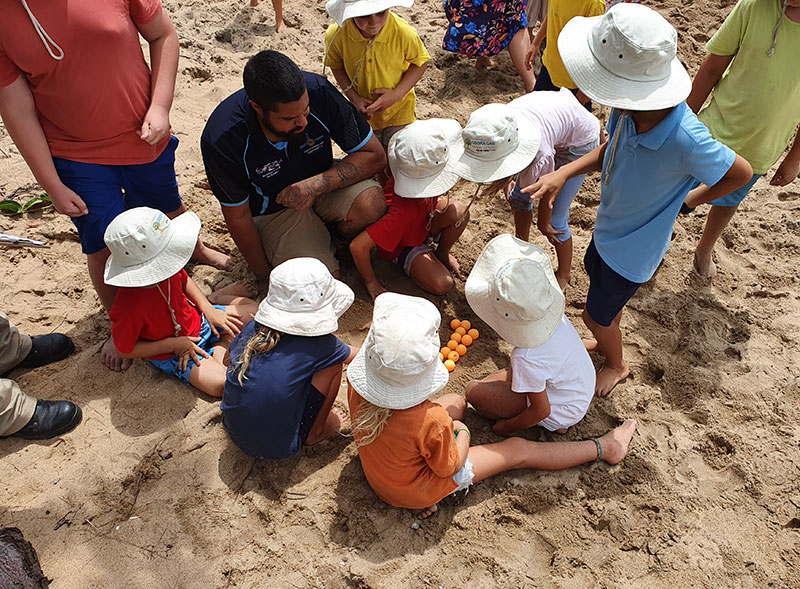
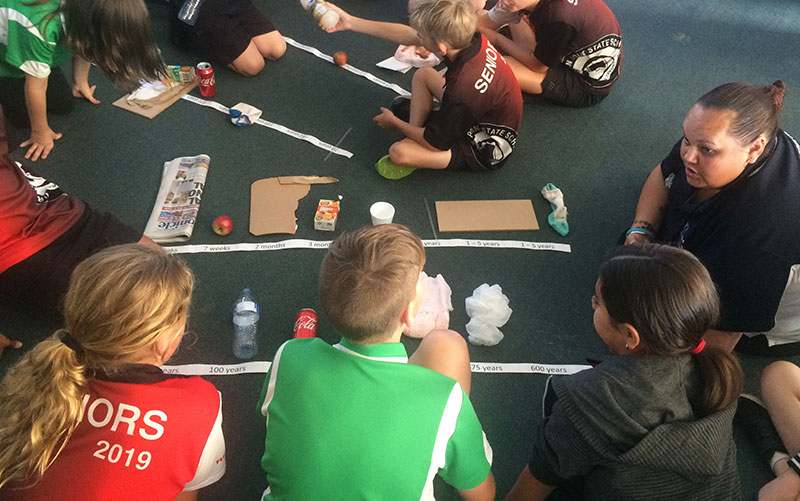
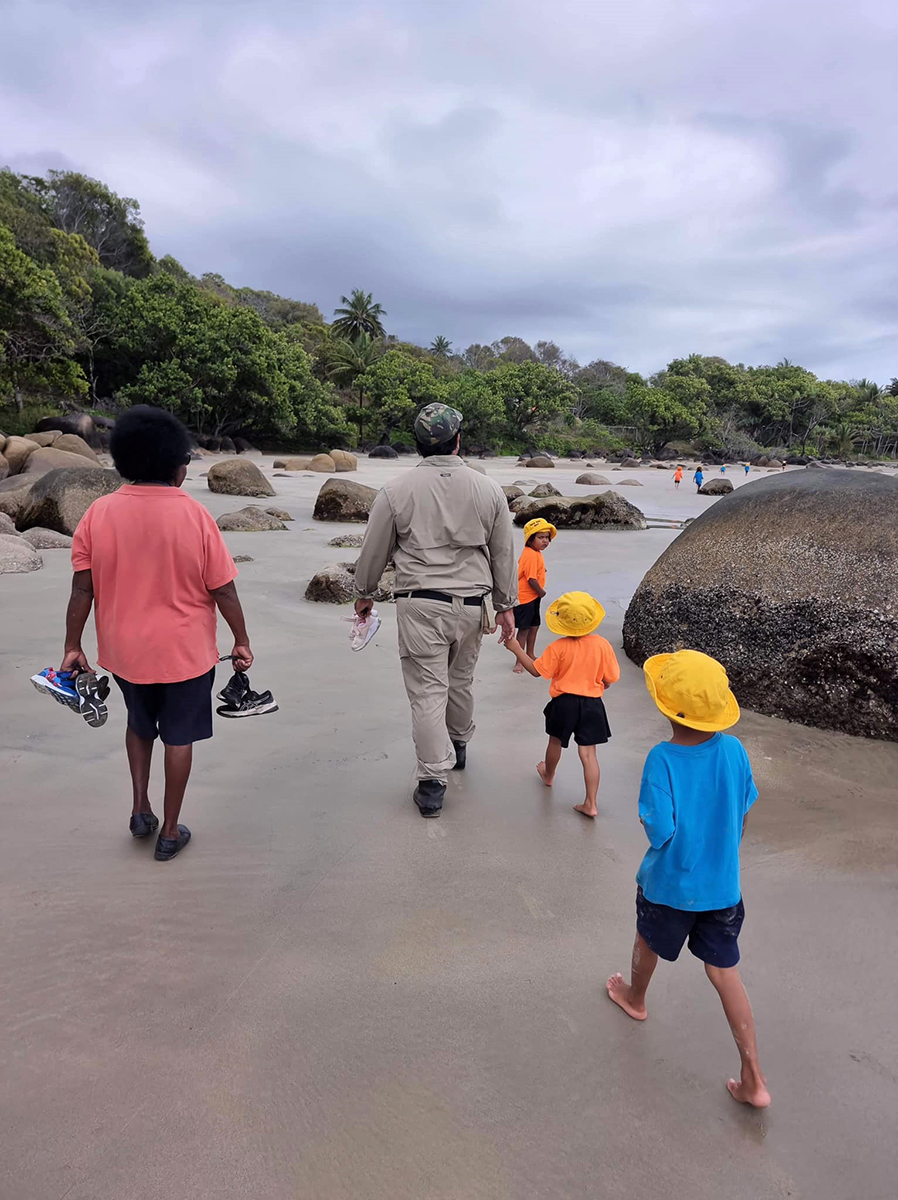
One of the ways rangers engage with young people is through Junior Ranger programs for primary school students. These programs consist of a series of interconnected learning activities conducted both in the classroom and on Country. Rangers partner closely with schools to plan and deliver the activities, ensuring they are aligned with the Australian curriculum.
Girringun rangers work with surrounding schools in their area, sharing valuable knowledge about Country, culture and language with younger generations.
Butchulla rangers deliver a successful Junior Ranger program to Urangan Point State School that shares their knowledge about Country, culture and language with the younger generation.
Video of students from Urangan Point State School engaging in learning about country and culture in the successful Butchulla Junior Ranger Program
Butchulla Junior Rangers Program, 2022
Urangan Point State school
So why is it important for you guys to teach youth the stories?
Just to keep the culture alive, and promote that intergenerational learning, so that these stories are able to be told to the next generation.
Showing them what the names are for different animals, and different places, and you know, teaching them the traditional Butchulla names for the places that they live, and play … and it gives them that cultural understanding of the place they’ve grown up in.
We do games, different games, ‘Head shoulders knees and toes’, we do that and then also using different flash cards for different animals. So we try to utilise it into fun activities the kids like to do, but just incorporating that language.
Promoting the intergenerational learning is very important, keeping that culture alive and getting the children to learn about the places they live and play.
This is why we do this program too, not just with the Indigenous kids, we do it with the whole of grade 6 so they can all learn about the language and culture, so it’s not isolated just for the murri kids, we want everyone to learn and promote that reconciliation.
They really want to learn the culture, they want to learn the dance, and language, they really thrive to be really good in that area. We’ve had a lot of feedback from the school, that the kids that struggle in the classroom do really well in our program.
We work with the school also, so that they can do things after we leave too, so they can still use that within their curriculum. We’ve worked in with the school so that that continuous learning can still happen when we’re not in the school.
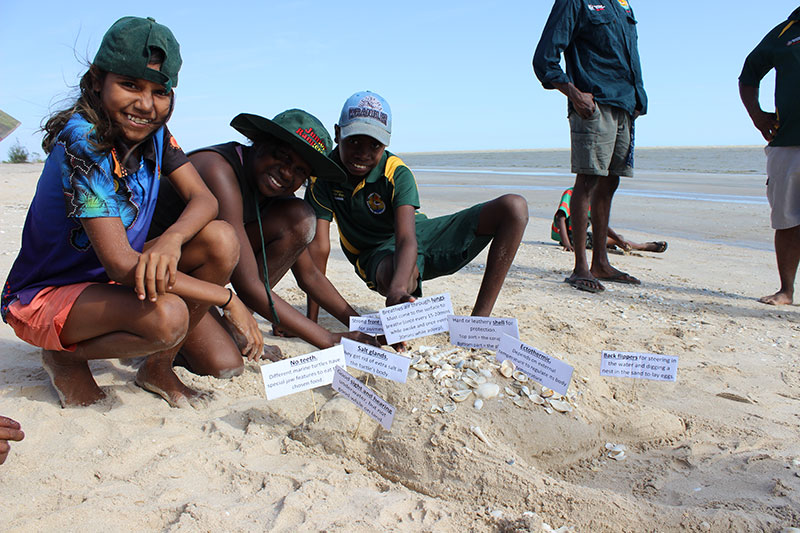
Some of the lessons we do are about marine debris and picking up rubbish; talking about ‘milbies’ our turtles and their seasons and how we look after them; and wongari safety. We have dingoes on the island, we do a lesson about that and what the dos and don’ts are…
So this area here is very special to Butchulla people it was a meeting place, where we are here now, this open area here. The grass doesn’t really grow here, it never has, because this was always a big corroboree ground for our mob.
To promote the environmental and cultural values of Butchulla country. You know that’s what our whole program is about, promoting those laws and getting that knowledge out there, about country and caring for country.
What is good for the land must come first, Number two - do not touch or take anything that does not belong to you, and number three? If you have plenty you must share, good work guys.
I’m glad that they’ve got that and they’re able to learn that and then have that for future generations to pass onto their children and their grandchildren.
Secondary students
For older students, rangers may deliver educational presentations and activities both in the classroom and on Country, offering practical learning experiences that encompass all areas of the Australian Curriculum, including cross-curriculum priorities such as embedding First Nations perspectives.
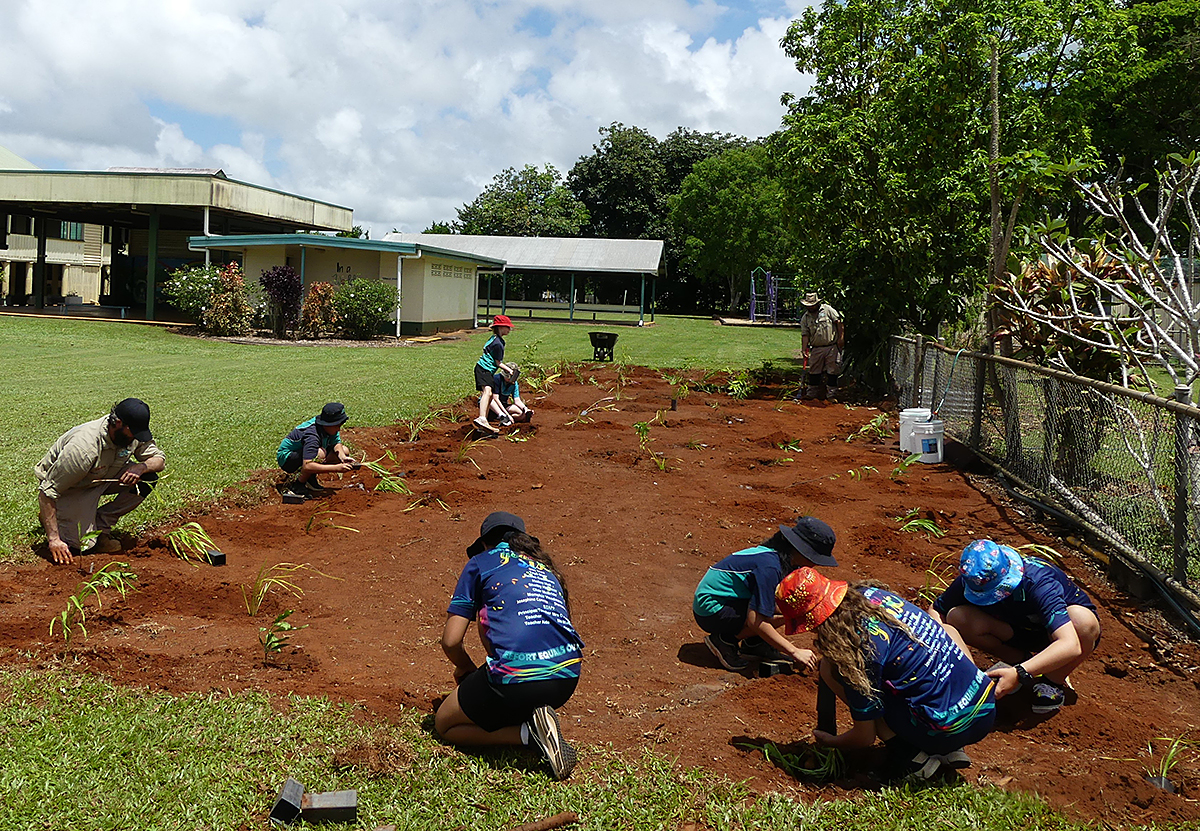
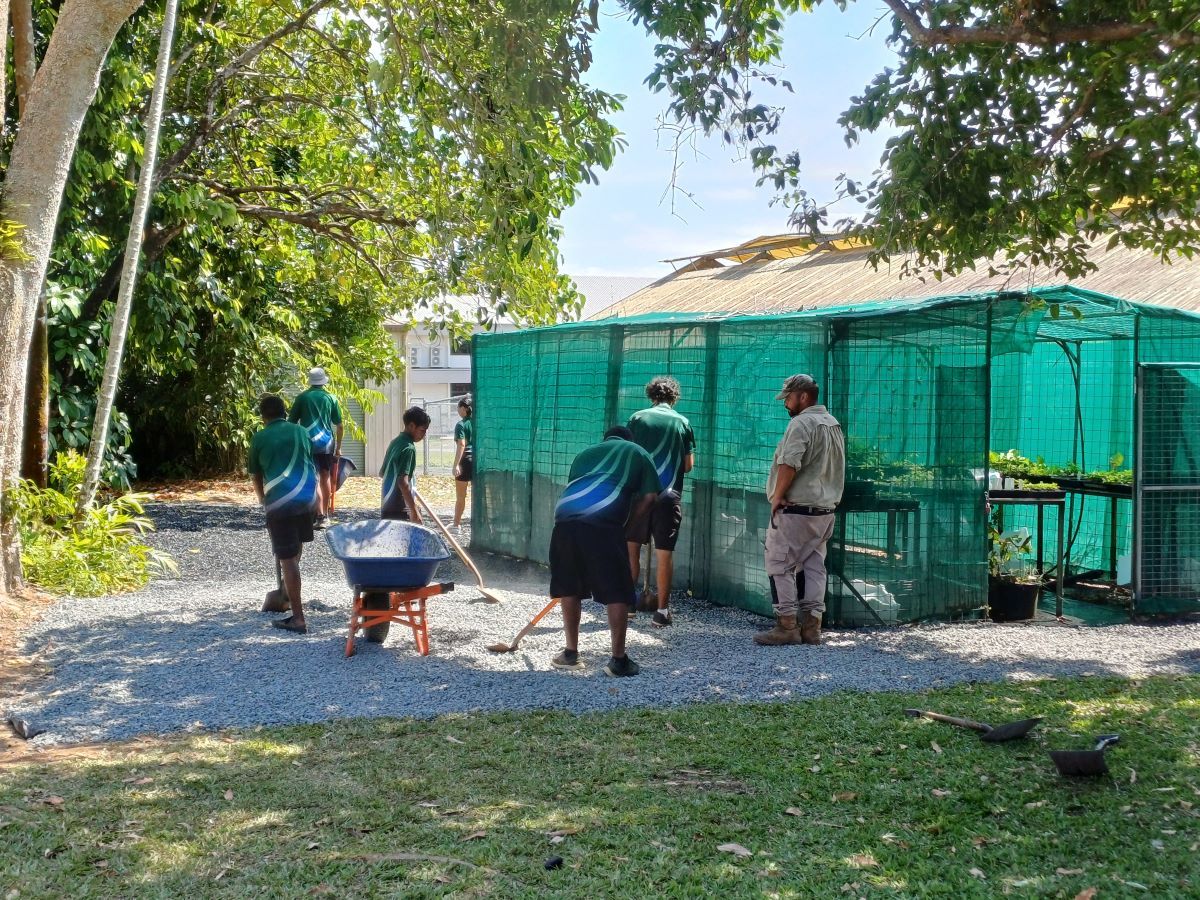
Mamu rangers, in partnership with Innisfail State College, Cassowary Coast Council, and C4 Nursery, engage students in alternative learning environments, through activities like greenhouse restoration, seed collecting, plant propagation and revegetation programs.
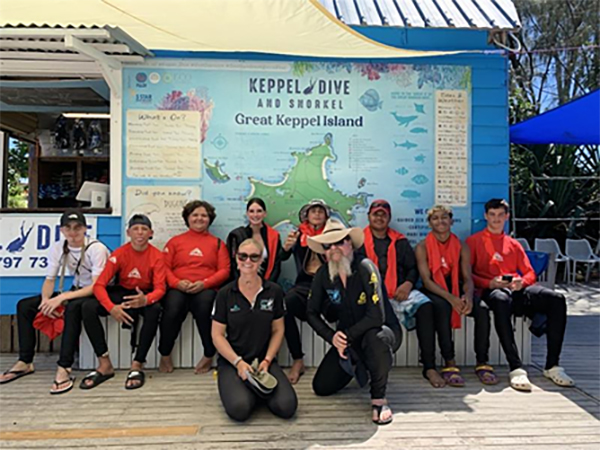
Woppaburra and Darumbal Rangers work with Year 11 and 12 students from local high schools to deliver the Yadaba Nunthi Junior Ranger Program, creating pathways into conservation management and eco-tourism careers. The hands-on program includes cultural connection on country with Elders, vocational qualifications and industry-recognised training. Partnering with QPWS, students undertake land-based conservation and management activities in local national parks. Partnering with eco-tourism operators, students undertake sea country monitoring activities, marine tourism industry traineeships and industry placements on Woppa Island (North Keppel).
- View video on Glenmore State High School website of students engaged in land-based activities in national parks.
- View video on Facebook (courtesy of Channel 7) of students engaged in marine-based activities on sea country.
Additionally, some ranger groups offer work experience programs and support school-based traineeships for secondary students. Ranger groups also partner with secondary schools and registered training organisations to deliver vocational education and training qualifications, such as Certificate II in Conservation and Ecosystem Management.
Young people out of school
Ranger groups engage with young people who have left school, including those not currently involved in work or training.
These young people may volunteer in ranger-led activities, such as beach clean-ups and tree planting, or assist with organising community events such as NAIDOC Week.
Through these diverse activities, young people learn about caring for Country from their ranger role models and mentors, both in theory and in practice.